




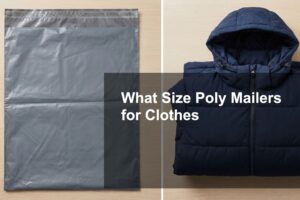
Complete Sizing Guide (2026)
Shipping hoodies presents unique challenges that differ from other apparel items. The thick fabric, attached hood, and drawstrings create bulk that standard packaging approaches cannot accommodate. Choosing the wrong poly mailer size for clothes leads to damaged merchandise, frustrated customers, and costly returns. This comprehensive guide provides definitive answers on poly mailer sizing specifically for hoodies, ensuring your packages arrive in perfect condition while optimizing your shipping costs.
Whether you’re selling custom-printed hoodies on Etsy, running a streetwear brand on Shopify, or shipping vintage sweatshirts on Depop, understanding the specific packaging requirements for hooded garments will transform your fulfillment process. This article covers everything from exact dimensional requirements to folding techniques, MIL thickness recommendations, and common mistakes that experienced sellers learn to avoid.
The Short Answer: 12" x 15.5" Fits Most Adult Hoodies
If you’re looking for a quick answer, 12 inches by 15.5 inches is the poly mailer size that accommodates the majority of standard adult hoodies. This large-size mailer provides adequate room for the typical folded hoodie dimensions of 9-10 inches long by 6-8 inches wide, plus additional space for protective tissue paper, branded inserts, or hang tags.
The 12×15.5 inch mailer has become the industry standard for several reasons. First, it balances package dimensions with shipping costs more effectively than alternatives. Second, this size fits within the dimensional weight thresholds for USPS First Class Package Service when combined with proper folding, keeping your shipping expenses manageable. Third, the extra depth accommodates hoodies with particularly puffy hoods that resist compression.
However, “most” does not mean “all.” Heavyweight hoodies, oversized fits, and fleece-lined styles often require larger mailers. The following sections provide detailed guidance for matching specific hoodie types to their optimal mailer sizes, ensuring you never overpay for excessive packaging or risk damage from undersized mailers.
Quick Reference: Lightweight hoodies (S-M): 10×13″ | Midweight hoodies (M-L): 12×15.5″ | Heavyweight hoodies (XL-XXL): 14.5×19″ | Oversized/fleece-lined: 17×22″
Understanding Hoodie Dimensions: Folded vs. Unfolded
One of the most critical concepts in hoodie shipping is understanding the difference between folded and unfolded dimensions. Unfolded hoodie measurements are irrelevant for packaging purposes, yet many sellers make the mistake of selecting mailer sizes based on how a hoodie lays flat before folding.
A typical adult hoodie measures approximately 26-28 inches from shoulder to hem when laid flat, with a chest width of 20-24 inches. The hood itself adds significant volume when spread out. However, when properly folded using techniques detailed later in this guide, the same hoodie compresses to approximately 9-10 inches in length, 6-8 inches in width, and 1.5-3 inches in depth.
This dramatic size reduction occurs through strategic folding that flattens the hood, collapses the sleeves, and compresses the thick French terry or fleece fabric. Understanding your folded dimensions allows you to select mailers with precision, avoiding both the waste of oversized packaging and the damage caused by undersized alternatives.

Why Unfolded Measurements Mislead
Sellers who select mailers based on unfolded measurements inevitably purchase mailers that are too large. A 10×13 inch hoodie laid flat looks impossibly small compared to its actual unfolded size of roughly 14×18 inches. This optical illusion leads to purchasing oversized mailers that increase shipping costs and allow items to shift during transit, potentially causing damage.
Always measure your hoodie in its shipping configuration. Fold the garment exactly as you would before packing it, then measure the resulting rectangular shape. These folded dimensions should form the foundation of your mailer selection process, with appropriate buffer space added based on the hoodie weight category.
Variables Affecting Folded Hoodie Dimensions
Several factors influence how compactly a hoodie folds, which directly impacts which mailer size you need:
- Fabric weight: Lightweight French terry compresses more readily than heavyweight loops-back cotton. Fleece-lined hoodies resist compression due to their plush interior.
- Hood size: Oversized hoods designed for maximum coverage contain more fabric volume. Fashion hoodies with dramatically shaped hoods may require larger mailers despite the garment otherwise being standard-sized.
- Fit style: Relaxed fit and oversized hoodies contain more fabric than their measured dimensions suggest. The extra volume distributes throughout the garment rather than being contained within precise measurements.
- Drawstring details: Hoodies with braided drawstrings, metal aglets, or decorative绳 ends add rigid points that resist flattening and may puncture thin poly mailers.
- Print or embroidery: Large graphic prints, embroidered designs, or appliques create raised surfaces that cannot be compressed without risking damage to the decoration.
Poly Mailer Size Chart for Hoodies and Sweatshirts
Use this comprehensive size chart to match your specific hoodie type to the optimal poly mailer dimensions. These recommendations account for proper folding techniques and include buffer space for protective packaging.
| Hoodie Type | Size Range | Folded Dimensions (approx.) | Recommended Mailer | Shipping Method |
|---|---|---|---|---|
| Lightweight Pullover | S, M | 8-9″ L x 6-7″ W x 1-1.5″ D | 10″ x 13″ | USPS First Class |
| Standard Midweight | M, L | 9-10″ L x 6-8″ W x 1.5-2″ D | 12″ x 15.5″ | USPS First Class |
| Heavyweight / Thermal | L, XL | 10-11″ L x 7-8″ W x 2-2.5″ D | 14.5″ x 19″ | USPS Priority |
| Oversized / Relaxed Fit | XL, XXL | 11-12″ L x 8-9″ W x 2.5-3″ D | 14.5″ x 19″ | USPS Priority |
| Fleece-Lined / Sherpa | M, L, XL | 10-12″ L x 8-9″ W x 2.5-3″ D | 17″ x 22″ | USPS Priority |
| Zip-Up Hoodie | S, M, L | 9-10″ L x 7-8″ W x 1.5-2″ D | 12″ x 15.5″ | USPS First Class |
| Zip-Up Heavyweight | XL, XXL | 11-12″ L x 8-9″ W x 2.5-3″ D | 17″ x 22″ | USPS Priority |
| Youth / Kids | Youth S, M, L | 7-8″ L x 5-6″ W x 1″ D | 7.5″ x 10″ or 10″ x 13″ | USPS First Class |

These recommendations assume proper folding techniques (detailed below). Without correct folding, even lightweight hoodies may require larger mailers. The depth dimension is particularly affected by folding technique, as aggressive folding can reduce thickness by 30% or more.
Pro Tip: When shipping hoodies with your logo or brand, add a tissue paper layer inside the mailer for presentation. This requires upgrading one mailer size in most cases. For example, a midweight hoodie that normally fits in a 12×15.5 inch mailer will need a 14.5×19 inch mailer if you include branded tissue paper and a thank-you card.
MIL Thickness: How Thick Does Your Poly Mailer Need to Be?
Beyond dimensions, the MIL thickness of your poly mailer significantly impacts whether your hoodie arrives safely. MIL (thousandth of an inch) measures the gauge of polyethylene film used in mailer construction. Using inadequate thickness risks tears, punctures, and moisture infiltration during shipping.
| Hoodie Type | Recommended MIL | Film Thickness | Protection Level | Best For |
|---|---|---|---|---|
| Lightweight French Terry | 2.0 – 2.5 MIL | Paper-thin | Basic | Small quantities, local shipping |
| Standard Midweight | 2.5 – 3.0 MIL | Standard | Good | Most e-commerce shipments |
| Heavyweight / Thermal | 3.0 – 3.5 MIL | Reinforced | Excellent | Heavier items, longer transit |
| Oversized / High-Value | 3.5 – 4.0 MIL | Heavy-duty | Maximum | Premium items, protection priority |
The relationship between hoodie weight and required MIL thickness is straightforward: heavier, bulkier hoodies require thicker mailers for two reasons. First, the additional weight increases stress on the poly film during handling. Second, heavyweight hoodies often have metal grommets, rivets, or rigid drawstring ends that can puncture thin mailers during transit.
What Happens with Insufficient MIL Thickness
Using a mailer with inadequate thickness for your hoodie creates several failure modes. The most common is tearing at the corners or edges where stress concentrates during sorting and delivery. A torn poly mailer exposes your hoodie to dust, moisture, and theft during transit.
Punctures from drawstring aglets or decorative elements create smaller holes but can still allow moisture infiltration. While the garment may not fall out, water damage through multiple small punctures creates customer complaints just as serious as catastrophic failures.
Thin mailers also increase the likelihood of compression damage. The polyethylene film provides a secondary cushioning layer over the garment itself. Without adequate thickness, sharp edges or corner impacts transfer directly to the hoodie fabric, potentially damaging prints, embroidery, or the garment structure itself.
Warning: Never use 1.5-2.0 MIL mailers for adult hoodies, even lightweight ones. The drawstrings and hood grommets on virtually all hoodies will eventually poke through these thin films during the sorting process, resulting in damaged merchandise.
Balancing Cost and Protection
Thicker mailers cost more per unit, but the expense is justified when shipping valuable or heavyweight hoodies. For standard midweight hoodies priced at $35-75, a 2.5-3.0 MIL mailer provides adequate protection at a reasonable cost. Premium hoodies ($75+) warrant the investment in 3.0-4.0 MIL heavy-duty mailers.
Many sellers maintain two MIL thickness categories in their inventory: standard (2.5-3.0 MIL) for lightweight and midweight items, and heavy-duty (3.5-4.0 MIL) for heavyweight, oversized, or premium hoodies. This two-tier approach optimizes costs without compromising protection.
Need Help Selecting the Right Poly Mailer?
Our complete guide to poly mailer sizes for clothing covers everything from hoodies to jeans, with detailed recommendations for every garment type.
How to Fold a Hoodie for Shipping: Step-by-Step
Proper folding technique dramatically affects which mailer size you need. Mastering these steps reduces your package dimensions by 30-40% compared to careless folding, allowing you to use smaller, more cost-effective mailers while improving the professional presentation of your shipments.
- Prepare a clean, flat surface. Clear enough space to lay the hoodie completely flat without any fabric hanging over edges. A folding table or clean floor works well. Any wrinkles or bunched fabric will persist through subsequent folds.
- Position the hoodie hood-down. Lay the hoodie flat with the hood facing down against the surface. Spread the hood out flat so it lies as uniformly as possible. Any bunching in the hood translates to excess bulk in your final folded package.
- Fold sleeves toward center. Take the left sleeve and fold it inward toward the center of the hoodie, stopping when the sleeve edge aligns roughly with the garment’s center seam. Repeat on the right side. The sleeves should overlap slightly, creating a narrower rectangular shape with no exposed sleeve fabric on the sides.
- Fold bottom hem upward. Fold the bottom hem of the hoodie upward, approximately one-third of the total garment length. For a hoodie with a 28-inch body, this fold reaches approximately 9-10 inches from the bottom. This first fold establishes the foundation for your final rectangular shape.
- Fold top downward. Fold the shoulder and hood section downward to meet the edge of your previous fold. You now have a compact rectangle with the hood’s bulk contained inside. If the hood is particularly thick, consider folding it in half before this step.
- Turn and final adjustment. If necessary, turn the package over to ensure the cleanest side faces outward for presentation. Make any final adjustments to create as uniform a rectangle as possible. The goal is a package with no exposed edges or corners that could catch and tear during shipping.

Pro Tip: For vacuum-sealing hoodies: Place the folded hoodie in a vacuum storage bag, seal, and remove air using a standard vacuum cleaner attachment. This technique reduces volume by up to 40%, allowing you to use smaller mailers and potentially qualify for lower shipping tiers. However, do not vacuum-seal hoodies with heat-sensitive prints or decals, as the compression may damage them.
Special Considerations for Zip-Up Hoodies
Zip-up hoodies require modified folding technique because the zipper creates a rigid structural element. Always zip the hoodie completely closed before beginning the folding process. The zipper distributes stress points during folding and prevents the garment from splaying open.
When folding sleeves on zip-up hoodies, tuck them slightly under the opposite side rather than overlapping. This prevents the zipper pull from catching on other fabric during handling. Some sellers remove zipper pulls and include them separately in a small bag inside the package, though this adds labor time.
Common Sizing Mistakes to Avoid When Shipping Hoodies
Sellers who ship hoodies regularly encounter predictable pitfalls that damage merchandise, increase costs, and frustrate customers. Understanding these common mistakes helps you avoid repeating the expensive learning curve many sellers experience.
- Choosing mailers based on unfolded measurements: This is the most frequent error. A hoodie that measures 28 inches long flat does not require a 28-inch mailer. Always measure your folded garment before selecting packaging. Using unfolded dimensions typically results in purchasing mailers that are 2-4 sizes too large.
- Ignoring drawstring length and hardware: The drawstrings on hoodies extend beyond the garment body and often include metal aglets or decorative ends. These rigid points can puncture through thin poly mailers, especially when the package is compressed during sorting. Always account for drawstring volume and select adequate MIL thickness.
- Selecting the minimum fitting size: When a hoodie barely fits in a mailer, any slight shift or compression during transit creates pressure on the fabric. This pressure causes deep creases that are difficult to remove and may damage prints, embroidery, or the hood shape. Always include 1-2 inches of buffer space beyond your folded measurements.
- Overlooking hoodie depth after folding: Sellers often check length and width but forget that hoodie thickness (depth) is equally important. A folded hoodie with 3-inch depth requires a mailer with adequate gusset expansion. Flat mailers without gussets may split along the bottom seam when accommodating thick items.
- Using standard mailers for oversized styles: An XXL hoodie in relaxed fit contains significantly more fabric volume than a medium hoodie in slim fit, even if both are labeled as adult sizes. Oversized hoodies and hoodies designed with extra-long bodies require sizing up from what you would select for standard-fit garments.
- Failing to account for tissue paper and inserts: Branded tissue paper, thank-you cards, stickers, or care instruction inserts add cumulative volume. What fits perfectly without inserts may be too tight with them. Either factor this volume into your initial sizing or plan to size up when adding promotional materials.
Critical Mistake: Using a 10×13 inch mailer for standard adult hoodies because it “looks big enough” is a guarantee of problems. The thick fabric, hood, and drawstrings create bulk that this size cannot accommodate. Save yourself the returns and customer complaints: use a 12×15.5 inch or larger mailer for all standard adult hoodies.
What to Do When You Have the Wrong Size Mailer
If you’ve inherited an inventory of wrong-sized mailers, don’t force hoodies into packages that are too small. Instead, consider these alternatives:
Use the small mailers for lightweight hoodie variants (summer-weight, cropped, or children’s hoodies) where appropriate. The 10×13 size works perfectly for these lighter alternatives, even if it’s inadequate for standard adult hoodies.
For mailers that are too large, double-box smaller items together when appropriate, or use them for other products in your inventory that fit properly. Some sellers also use oversized mailers for hoodies by adding extra tissue paper for protection and presentation, effectively using the excess space creatively.
Moving forward, use this guide to inform future purchasing decisions. Building a proper mailer inventory based on actual product requirements eliminates these problems entirely and typically reduces packaging costs through more appropriate sizing.
Frequently Asked Questions
What size poly mailer do I need for a standard adult hoodie?
A 12 x 15.5 inch poly mailer fits most standard adult hoodies. This size accommodates the typical folded dimensions of 9-10 inches long by 6-8 inches wide, with enough buffer for protective packaging and to prevent fabric compression damage. If your hoodie is particularly bulky or has an oversized fit, you may need a 14.5 x 19 inch mailer.
Can I use a 10x13 poly mailer for a lightweight hoodie?
A 10×13 poly mailer may work for lightweight hoodies in small or medium sizes. However, most adult hoodies have too much bulk from the hood and drawstrings to fit comfortably in this size. Using a mailer that’s too small risks stretching the hood, damaging drawstrings, and creating deep creases in the fabric that are difficult to remove.
What MIL thickness is best for shipping hoodies?
For midweight hoodies (the most common type), a 2.5-3.0 MIL poly mailer provides adequate protection. Lightweight hoodies can ship in 2.0-2.5 MIL mailers, while heavyweight or oversized hoodies require 3.0-4.0 MIL thickness to prevent tearing and punctures during transit. The drawstrings and metal aglets on hoodies specifically require at least 2.5 MIL film to avoid puncture damage.
How do I fold a hoodie to minimize its shipping size?
To fold a hoodie compactly: 1) Lay it flat with the hood facing down, 2) fold the sleeves inward toward the center, 3) fold the bottom hem up about one-third, 4) fold the top down to meet the bottom edge, creating a rectangular package. For extra compression, consider vacuum-sealing before placing in the poly mailer, which can reduce volume by up to 40%.
What happens if I use a poly mailer that's too small for a hoodie?
Using an undersized poly mailer for hoodies causes several problems: the drawstrings can puncture through the material, the hood can become stretched or misshapen, deep creases form in the thick fabric that are difficult to remove, and the increased pressure can damage any prints or embroidery on the garment. Additionally, packages under mechanical stress during shipping are more likely to tear open.
Should I measure hoodie dimensions folded or unfolded?
Always measure hoodies in their folded, shipping configuration. Unfolded dimensions are irrelevant because you never ship hoodies flat. A hoodie might measure 28 inches long unfolded, but when properly folded, it typically compresses to 9-10 inches, which is the dimension that matters for selecting a poly mailer. This is the most common sizing mistake sellers make.
How much extra space should I leave when choosing a poly mailer for hoodies?
Add at least 1-2 inches of buffer on each dimension beyond your folded hoodie measurements. This extra space prevents fabric compression, allows room for tissue paper or branded inserts, and accommodates the slight dimensional loss that occurs when sealing the mailer (approximately 0.25-0.5 inches per side when the adhesive strip is pressed).
Are poly mailers or boxes better for shipping hoodies?
For most hoodie shipments, poly mailers are more cost-effective than boxes. They weigh less (reducing shipping costs), take up less storage space, and provide adequate protection when sized correctly. However, for very heavyweight hoodies or items with delicate decorations, boxes provide better structural support. Our comparison guide on boxes vs. poly mailers provides detailed analysis for making this decision.
Ready to eliminate seal failures and size mismatches from your supply chain?
Request a formal quote with your specifications. Response within 4 business hours.
RHK Packaging — ISO 9001:2015 Certified Manufacturer Since 2010
[email protected]