




Complete Sizing Guide (2026)
Shipping clothing items presents unique challenges that differ from most other e-commerce products. Apparel comes in various shapes, fabrics, and volumes, making accurate poly mailer sizing for clothing critical for both cost management and product protection. Whether you’re selling vintage t-shirts on Depop, running a boutique on Shopify, or fulfilling wholesale orders to retailers, choosing the correct poly mailer size directly impacts your bottom line and customer satisfaction.
An ill-fitting poly mailer creates a cascade of problems: items that barely fit arrive wrinkled and creased, forcing customers to iron or return products. Oversized mailers increase dimensional weight charges, eating into profit margins. Metal hardware on jeans or embellishments on dresses can puncture thin packaging, exposing merchandise to moisture and damage during transit.
This comprehensive guide provides definitive sizing recommendations for every major clothing category, from lightweight t-shirts to full-length dresses. Each recommendation includes folded dimensions, appropriate mailer sizes, and practical tips for maximizing packaging efficiency while ensuring your products arrive in pristine condition.
The Short Answer: It Depends on the Garment
There is no universal poly mailer size for clothing because garments vary dramatically in their dimensions, bulk, and structural characteristics. A perfectly folded standard t-shirt might measure just 9 by 7 inches, while a pair of relaxed-fit jeans can expand to 14 by 11 inches when folded. Understanding these differences is essential for selecting appropriate packaging.
The most important principle in clothing shipping is always to measure your item in its folded, ready-to-ship configuration. Never select a poly mailer based on how a garment hangs on a hanger or lays flat when unfolded. A shirt that measures 28 inches from shoulder to hem becomes a compact 9-10 inch rectangle when properly folded, and your packaging decision must reflect the folded size, not the unfolded dimensions.
Beyond basic dimensions, consider fabric type, hardware presence, and whether the item includes embellishments that might puncture packaging. Denim jeans with metal rivets require thicker MIL ratings than cotton t-shirts. Sequin dresses need more protection than plain jersey knit tops. By understanding these variables and how they affect your shipping strategy, you can select mailers that balance protection, cost, and presentation quality.
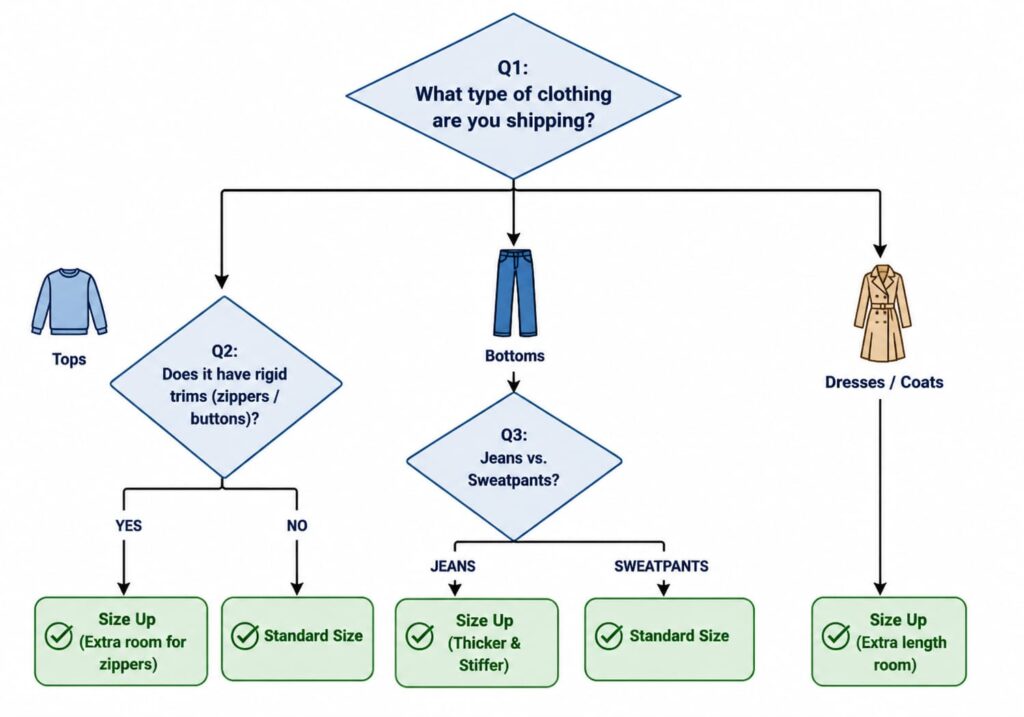
Quick Reference: T-shirts: 10×13″ | Shirts/Blouses: 12×15.5″ | Pants/Jeans: 14×19″ to 17×22″ | Dresses: 12×15.5″ to 17×22″ depending on length
Poly Mailer Size Chart for Common Clothing Items
This comprehensive size chart provides recommended poly mailer dimensions for the most common clothing categories. All recommendations assume proper folding techniques and include a 1-2 inch buffer for protective packaging, tissue paper, or branded inserts.
| Clothing Type | Garment Size Range | Folded Dimensions (approx.) | Recommended Mailer | Ideal MIL Thickness |
|---|---|---|---|---|
| T-Shirts (Standard) | XS – XL | 9-10″ L x 6-7″ W x 0.5-1″ D | 10″ x 13″ | 2.0 – 2.5 MIL |
| T-Shirts (Heavyweight) | L – XXL | 10-11″ L x 7-8″ W x 1-1.5″ D | 12″ x 15.5″ | 2.5 – 3.0 MIL |
| Shirts/Blouses (Lightweight) | XS – L | 9-10″ L x 7-8″ W x 0.5-1″ D | 10″ x 13″ or 12″ x 15.5″ | 2.0 – 2.5 MIL |
| Shirts/Blouses (Structured) | M – XL | 10-11″ L x 8-9″ W x 1-1.5″ D | 12″ x 15.5″ | 2.5 – 3.0 MIL |
| Casual Pants (Khakis, Chinos) | XS – L | 11-12″ L x 8-9″ W x 1-1.5″ D | 14″ x 19″ | 2.5 – 3.0 MIL |
| Jeans (Standard Fit) | S – L | 12-13″ L x 9-10″ W x 1.5-2″ D | 14″ x 19″ | 2.5 – 3.0 MIL |
| Jeans (Relaxed/Oversized) | L – XXL | 13-14″ L x 10-11″ W x 2-2.5″ D | 17″ x 22″ | 3.0 – 3.5 MIL |
| Shorts | XS – XL | 9-10″ L x 8-9″ W x 0.5-1″ D | 10″ x 13″ or 12″ x 15.5″ | 2.0 – 2.5 MIL |
| Leggings/Athleisure | XS – L | 10-11″ L x 6-7″ W x 0.5-1″ D | 10″ x 13″ | 2.0 – 2.5 MIL |
| Skirts (Mini) | XS – M | 8-9″ L x 7-8″ W x 0.5-1″ D | 10″ x 13″ | 2.0 – 2.5 MIL |
| Skirts (Midi/Maxi) | S – L | 12-14″ L x 8-10″ W x 1-2″ D | 14″ x 19″ | 2.5 – 3.0 MIL |
| Dresses (T-Shirt/Short Sleeve) | XS – M | 10-11″ L x 7-8″ W x 1-1.5″ D | 12″ x 15.5″ | 2.5 – 3.0 MIL |
| Dresses (Knee-Length) | S – L | 12-14″ L x 8-10″ W x 1.5-2″ D | 14″ x 19″ | 2.5 – 3.0 MIL |
| Dresses (Maxi/Full-Length) | S – XL | 15-18″ L x 10-12″ W x 2-3″ D | 17″ x 22″ | 3.0 – 3.5 MIL |
| Sweaters (Lightweight) | XS – M | 10-11″ L x 8-9″ W x 1.5-2″ D | 12″ x 15.5″ | 2.5 – 3.0 MIL |
| Sweaters (Heavyweight) | L – XXL | 12-14″ L x 9-10″ W x 2-3″ D | 14″ x 19″ or 17″ x 22″ | 3.0 – 3.5 MIL |
| Hoodies/Sweatshirts | S – L | 10-11″ L x 8-9″ W x 2-2.5″ D | 12″ x 15.5″ | 2.5 – 3.0 MIL |
| Hoodies (Heavyweight/Oversized) | L – XXL | 12-14″ L x 9-11″ W x 2.5-3.5″ D | 14″ x 19″ or 17″ x 22″ | 3.0 – 4.0 MIL |
| Jackets (Lightweight) | XS – L | 12-13″ L x 10-11″ W x 2-2.5″ D | 14″ x 19″ | 3.0 MIL |
| Jackets (Heavyweight/Coats) | L – XXL | 14-16″ L x 11-13″ W x 3-4″ D | 17″ x 22″ | 3.5 – 4.0 MIL |

Note: Folded dimensions are approximate and will vary based on fabric type, garment construction, and folding technique. Always measure your specific items folded before selecting poly mailer sizes. When in doubt, size up to prevent compression damage.
Pro Tip: Keep a sample of each clothing type in your office, folded and ready. Use these physical samples when ordering packaging supplies to verify sizes before committing to bulk orders. This prevents the costly mistake of ordering thousands of mailers that don’t fit your actual products.
T-Shirt and Shirt Sizes (Small-Medium-Large)
T-shirts represent the most common clothing item shipped by e-commerce sellers, and their relatively compact folded size makes them ideal candidates for poly mailer packaging. Understanding the nuances between lightweight cotton tees and heavyweight graphic shirts ensures you select the right mailer every time.
Standard Cotton T-Shirts
A standard-weight cotton t-shirt, when folded using the method described below, typically measures 9-10 inches in length, 6-7 inches in width, and 0.5-1 inch in depth. This compact size makes the 10 x 13 inch poly mailer the ideal choice for most adult t-shirts in sizes small through extra-large.
The 10×13 inch mailer provides approximately 1-2 inches of buffer on each dimension beyond the folded garment, which accommodates tissue paper for presentation, printed thank-you cards, or slight variations in fabric thickness between different brands or styles. This extra space prevents the deep creases that form when garments are compressed into mailers that fit too tightly.
T-shirts sized XXL and above, or those made from heavyweight 6-8 ounce cotton, often require upsizing to a 12 x 15.5 inch mailer. The additional fabric weight and bulk create dimensions that approach or exceed the comfortable limits of the smaller mailer. Using a 10×13 inch mailer for these larger sizes risks stretching the collar, distorting any screen prints, and creating wrinkles that require ironing upon receipt.
Folding Technique for T-Shirts
Proper folding technique dramatically affects which mailer size you need. A poorly folded t-shirt can occupy nearly twice the volume of a professionally folded one. Master these steps to minimize your package dimensions and shipping costs.
- Lay the t-shirt flat. Place the t-shirt face-down on a clean, flat surface. Smooth out any wrinkles, particularly around the collar and hem areas. The cleaner the fold foundation, the more compact your final result.
- Fold sleeves inward at a 45-degree angle. Rather than folding sleeves straight across (which creates bulk at the shoulder), fold them inward at an angle that tapers toward the armpit. This creates a narrower, more tapered shape that reduces overall width.
- Fold the shirt in thirds lengthwise. Fold the left third of the shirt toward center, then fold the right third over that. You now have a long, narrow rectangle approximately 9-10 inches long and 5-6 inches wide.
- Roll or fold the bottom third up. Either roll the shirt tightly from the bottom (which creates the smallest package but may cause stubborn wrinkles) or fold the bottom third upward, then fold the top third down to meet it (which creates a neat rectangle better suited for retail presentation).
Lightweight Blouses and Shirts
Lightweight blouses, silk shirts, and sheer tops require different handling than cotton t-shirts. These delicate fabrics often include buttons, embellishments, or delicate stitching that can be damaged by compression. The folding approach must balance package efficiency with garment protection.
For lightweight blouses in sizes XS through L, a 10×13 inch or 12×15.5 inch mailer provides appropriate protection. The larger size accommodates the additional buffer needed for tissue paper between delicate fabric layers, preventing impressions and shine marks that occur when folded fabric sits against itself under pressure.
Structured dress shirts with stiff collars and cuffs require the 12×15.5 inch mailer without exception. The collar structure adds 1-2 inches of effective length when folded, and attempting to compress this into a smaller mailer permanently distorts the collar shape, requiring professional pressing to restore the garment.
Warning: Never fold shirts with decorative buttons, beading, or sequins with the embellishment facing inward. Always position hard embellishments facing outward or wrap them in tissue paper to prevent puncture damage to the poly mailer or the garment itself during transit.
Pants and Bottoms Sizes
Pants, jeans, and other bottoms present unique shipping challenges due to their length, bulk, and often heavy fabric weight. Unlike tops, which compress relatively easily, bottoms maintain more rigid structures that resist compression. Understanding how different pant styles fold differently ensures accurate mailer selection.
Casual Pants, Chinos, and Khakis
Lightweight casual pants in cotton or cotton-blend fabrics fold to approximately 11-12 inches in length and 8-9 inches in width, with a depth of 1-1.5 inches. A 14 x 19 inch poly mailer comfortably accommodates these dimensions with adequate buffer space for tissue paper or branded packaging inserts.
The key to folding pants compactly lies in the leg alignment technique. Lay the pants flat with legs together and aligned, ensuring no fabric bunches at the crotch or hip area. Fold one leg over the other to create a single stacked leg profile, then fold the waistband down approximately one-third of the total length. Fold the crotch area upward to meet the waistband fold, creating a compact rectangle.
Jeans and Denim
Denim presents different challenges than lightweight casual pants due to its heavier fabric weight, more rigid structure, and presence of metal hardware including rivets, buttons, and sometimes embellishments. These factors directly influence your mailer selection and MIL thickness requirements.
Standard-fit jeans in sizes S through L fold to approximately 12-13 inches in length and 9-10 inches in width, with depths of 1.5-2 inches due to the multiple fabric layers (waistband, pockets, and doubled fabric at seams). The 14 x 19 inch mailer handles these dimensions effectively in most cases.
Relaxed-fit, loose-leg, or oversized jeans in sizes L through XXL require upsizing to the 17 x 22 inch mailer. These styles contain significantly more fabric volume, and attempting to compress them into smaller mailers risks金属 hardware puncturing through the poly film, permanent distortion of the garment shape, and deep impressions in the denim that are difficult to remove.
| Denim Style | Size Range | Folded Dimensions | Recommended Mailer | Recommended MIL |
|---|---|---|---|---|
| Slim/Strait Leg (Lightweight Denim) | XS – M | 11-12″ L x 8-9″ W x 1-1.5″ D | 14″ x 19″ | 2.5 MIL |
| Standard Fit (Medium Weight) | S – L | 12-13″ L x 9-10″ W x 1.5-2″ D | 14″ x 19″ | 2.5 – 3.0 MIL |
| Relaxed/Loose Fit | L – XXL | 13-14″ L x 10-11″ W x 2-2.5″ D | 17″ x 22″ | 3.0 MIL |
| Heavyweight/Double-Knee | M – XXL | 13-14″ L x 10-11″ W x 2.5-3″ D | 17″ x 22″ | 3.0 – 3.5 MIL |
Leggings and Athletic Wear
The stretchy nature of leggings, yoga pants, and athletic wear allows for significantly more compact folding than rigid fabrics like denim. These items typically fold to just 10-11 inches in length and 6-7 inches in width, making the 10 x 13 inch mailer suitable for most sizes.
When shipping athletic wear, consider whether items include any hard components such as drawstring ends, zipper pulls, or built-in padding that might require additional protection or MIL thickness. Most standard athletic wear qualifies for 2.0-2.5 MIL mailers, but items with exposed metal hardware should use 2.5 MIL or thicker.
Dresses and Skirts Sizes
Dresses and skirts present the widest variation in shipping dimensions among common clothing categories, ranging from compact mini skirts to sprawling maxi dresses. This variability requires careful assessment of each individual item rather than relying on category-level generalizations.
T-Shirt Dresses and Casual Dresses
T-shirt dresses and casual knit dresses made from jersey fabric fold relatively compactly due to the flexible nature of knit materials. A standard t-shirt dress in sizes XS through M typically folds to 10-11 inches in length, 7-8 inches in width, and 1-1.5 inches in depth. The 12 x 15.5 inch poly mailer accommodates these dimensions comfortably.
The key consideration with casual dresses is any embellishment or decorative elements. If the dress includes beads, sequins, embroidery, or appliqué work, adding a layer of tissue paper between the embellishment and the poly mailer prevents both puncture damage to the packaging and potential damage to the decoration itself from friction during transit.
Structured and Formal Dresses
Structured dresses with stiff bodices, built-in boning, or formal silhouettes resist compression more than casual knits. These items often require the 14 x 19 inch mailer even at smaller sizes, as the structural elements maintain volume that cannot be eliminated through aggressive folding.
When shipping formal or structured dresses, consider the following factors: bodice boning and padding cannot be compressed without permanent damage to the silhouette; crinoline or tulle underskirts add significant volume; beaded or sequined areas create hard spots that require buffer space. For these reasons, formal dresses almost universally require 14 x 19 inch or larger mailers regardless of the garment’s fit size.
Midi, Maxi, and Full-Length Dresses
Longer dress styles present obvious challenges due to their extended length. A midi dress (typically falling to mid-calf) folds to approximately 12-14 inches in length, while a full-length maxi dress may reach 15-18 inches when folded for shipping.
For midi-length dresses in sizes S through L, the 14 x 19 inch mailer usually suffices. Full-length dresses and larger midi dresses in relaxed fits require the 17 x 22 inch mailer. The additional dimensions ensure the hem and any flowing fabric elements don’t bunch excessively or create deep, difficult-to-remove creases.
Consider vacuum storage bags for particularly voluminous formal dresses with extensive skirts or multiple layers. While not suitable for all fabrics (avoid vacuum compression on delicate silks or items with heat-sensitive decorations), vacuum storage can reduce dress volume by 30-40%, potentially allowing you to use smaller mailers than the unfolded dimensions would suggest.
Skirts: Mini to Maxi
Skirt sizing follows predictable patterns based on length. Mini skirts fold to just 8-9 inches and typically ship in 10 x 13 inch mailers. Midi skirts fall between mini and maxi lengths, often requiring 12 x 15.5 inch or 14 x 19 inch mailers depending on fabric bulk. Full maxi skirts with flowing fabric need at least 14 x 19 inches, with voluminous styles potentially requiring 17 x 22 inch mailers.
Wrap skirts present unique folding challenges due to their overlapping construction. Fold wrap skirts by overlapping the panels as designed, then folding the waistband area down to create a more compact rectangle before final packaging. This approach maintains the wrap’s shape while reducing overall dimensions.
Need Specific Guidance for Your Product Line?
Explore our complete library of shipping supplies for clothing sellers, including specialized packaging for delicate items, heavy garments, and high-value merchandise.
Tips for Reducing Dimensional Weight
Dimensional weight pricing, also known as volumetric weight, is used by carriers to calculate shipping costs based on package size rather than actual weight. For lightweight clothing items, dimensional weight often exceeds actual weight, resulting in higher shipping costs than necessary. Implementing these strategies reduces dimensional weight charges and improves your shipping efficiency.

Fold as Compactly as Possible
The single most effective way to reduce dimensional weight is minimizing your package dimensions through thorough, consistent folding. Each inch of excess length or width translates directly to higher shipping costs, especially for items shipped via air services or those traveling long distances.
Invest time in developing efficient folding techniques for each clothing category. Standardize your folding process across your fulfillment team to ensure consistency. Consider creating visual folding guides posted at packing stations to maintain quality control. A team that folds uniformly produces more predictable package dimensions, enabling more accurate mailer selection.
Use Vacuum Compression for Bulky Items
Vacuum storage bags offer dramatic volume reduction for bulky items including sweaters, hoodies, coats, and formal dresses. By removing air from the packaging, vacuum compression reduces volume by 30-50% compared to standard folding, potentially allowing you to use mailers two sizes smaller than conventional dimensions would suggest.
However, vacuum compression is not suitable for all items. Avoid vacuum packaging for: garments with heat-sensitive transfers or prints (the compression and temperature changes can crack or distort prints); delicate fabrics like silk or charmeuse (which can develop permanent impressions); items with batting or insulation (which can clump permanently); and garments with glue-applied embellishments (which can detach).
Choose the Right Mailer for Each Item
Using appropriately sized mailers for each specific garment prevents dimensional waste from oversized packaging. While maintaining inventory of multiple mailer sizes requires more planning than a one-size-fits-all approach, the shipping cost savings typically justify the added complexity.
Consider implementing a simple sizing system in your fulfillment process: small mailers (7.5 x 10 inch and 10 x 13 inch) for lightweight tops, t-shirts, and small accessories; medium mailers (12 x 15.5 inch) for standard shirts, lightweight dresses, and moderate-weight items; large mailers (14 x 19 inch) for pants, heavier shirts, and midi-length dresses; extra-large mailers (17 x 22 inch) for jeans, heavyweight items, and full-length garments.
Minimize Added Packaging Elements
While tissue paper, branded inserts, and thank-you cards enhance the unboxing experience, each added element increases your package dimensions. Evaluate whether each element is truly necessary for the shipping protection of your specific items. For standard clothing without delicate components, minimalist packaging may suffice.
For items requiring tissue paper for protection or presentation, factor the additional volume into your mailer selection. What fits perfectly without tissue might require sizing up when tissue is included. Some sellers use thin tissue paper specifically to fill voids rather than add volume, preventing items from shifting within the package during transit.
Consider Weight-Based Shipping Services
For heavier clothing items like jeans, sweaters, and jackets, weight-based shipping services may offer better rates than dimensional weight pricing. USPS Priority Mail uses weight-based pricing rather than dimensional weight for packages under a certain size threshold, making it more economical for heavy items in appropriately sized packages.
Compare carrier options for your specific routes and item weights. UPS and FedEx dimensional weight pricing can sometimes be avoided by using USPS for lightweight clothing items that nonetheless have some actual weight. Regional carriers may offer better rates for specific shipping lanes, particularly for packages traveling within a specific geographic area.
Pro Tip: USPS First Class Package Service has a 15.99 ounce weight limit and uses actual weight rather than dimensional weight. For single items of clothing that fall within this limit (most t-shirts, lightweight blouses, and thin shirts), First Class offers significant savings over Priority Mail dimensional weight pricing.
Frequently Asked Questions
What size poly mailer do I need for t-shirts?
A 10 x 13 inch poly mailer fits most folded t-shirts. When folded properly, a standard adult t-shirt measures approximately 9-10 inches long by 6-7 inches wide, which fits comfortably in this size with room for tissue paper or branding. Heavier t-shirts or those sized XXL and above typically require a 12 x 15.5 inch mailer.
Can I use the same poly mailer size for shirts and pants?
No, pants and bottoms require larger mailers than shirts. While a 10 x 13 inch mailer works for most folded t-shirts, pants need at least a 14 x 19 inch mailer when folded. Jeans and heavyweight pants often require 17 x 22 inch mailers due to their rigid fabric and multiple layers, including waistbands and pockets.
What poly mailer size is best for shipping dresses?
Dress poly mailer size depends on dress length and style. Short dresses and tunics fit in 12 x 15.5 inch mailers. Knee-length dresses need 14 x 19 inches. Full-length or maxi dresses require 17 x 22 inch mailers. Structured or formal dresses with boning or crinoline underskirts often need 14 x 19 inch or larger regardless of length.
How do I reduce dimensional weight charges when shipping clothes?
To reduce dimensional weight: fold clothes as compactly as possible using proper techniques; use vacuum storage bags for bulky items like sweaters and coats; minimize tissue paper and inserts; select the smallest mailer that fits each item without compression; and consider weight-based shipping services like USPS First Class for items under 15.99 ounces.
Should I measure clothes folded or unfolded to select poly mailer size?
Always measure clothes in their folded, shipping configuration. Unfolded measurements are irrelevant for poly mailer selection. A shirt may measure 28 inches long flat, but when folded it compresses to 9-10 inches. Always use folded dimensions plus 1-2 inches of buffer space when selecting poly mailer sizes.
What MIL thickness poly mailer do I need for clothing?
For lightweight clothing like t-shirts and thin blouses, use 2.0-2.5 MIL mailers. Medium-weight items like jeans, sweaters, and structured shirts need 2.5-3.0 MIL. Heavy items like coats, heavyweight jeans, or garments with metal hardware should use 3.0-4.0 MIL mailers for adequate puncture protection.
Is it cheaper to ship clothes in poly mailers or boxes?
Poly mailers are typically cheaper than boxes for most clothing items. They weigh less, reducing postage costs, and cost less per unit for packaging. They also take up less storage space. However, boxes provide better protection for fragile items, heavy clothing, or items with delicate embellishments. See our detailed cost comparison guide for specific scenarios.
How do I prevent metal hardware on jeans from puncturing poly mailers?
To prevent rivets, buttons, and metal hardware from puncturing poly mailers: select mailers with at least 2.5 MIL thickness for denim; wrap metal components in tissue paper before packaging; position hardware facing inward against folded fabric rather than outward; and for valuable denim with extensive metalwork, consider using 3.0 MIL or heavier mailers.
Conclusion: Getting Your Clothing Shipping Right
Successful clothing shipping requires understanding that each garment category presents unique packaging challenges. T-shirts compress compactly and fit in smaller mailers, while jeans require more substantial packaging and thicker MIL protection. Dresses range from compact knits to voluminous formal styles, each requiring appropriately sized mailers.
The most common mistake sellers make is selecting poly mailer sizes based on unfolded garment dimensions rather than folded measurements. This leads to chronic over-purchasing of oversized mailers and unnecessarily high shipping costs. By measuring garments in their actual shipping configuration and adding appropriate buffer space, you can optimize every shipment for cost efficiency.
Building a packaging inventory that includes multiple mailer sizes enables precise matching of package to product. While this requires more planning than a single-size approach, the savings in reduced dimensional weight charges and improved customer satisfaction from properly protected, professionally presented items justify the investment.
Remember to consider MIL thickness as carefully as dimensions. A mailer that fits perfectly but lacks adequate puncture resistance creates risk of catastrophic failure during transit. For items with metal hardware, heavy embellishments, or high value, thicker mailers provide insurance against damage claims and customer returns.
Final Recommendation: Build your clothing shipping strategy around these core principles: always measure garments folded, maintain inventory of 4-5 mailer sizes to match different clothing categories, select MIL thickness based on garment weight and hardware content, and continuously optimize based on actual customer feedback about package condition upon arrival.
For more specific guidance on shipping hoodies and sweatshirts, which present unique challenges due to their bulk and construction, see our dedicated guide to poly mailer sizes for hoodies. And for comprehensive comparison of packaging options including boxes and mailers, explore our analysis of whether it is cheaper to ship boxes or poly mailers.
Ready to eliminate seal failures and size mismatches from your supply chain?
Request a formal quote with your specifications. Response within 4 business hours.
RHK Packaging — ISO 9001:2015 Certified Manufacturer Since 2010
[email protected]