

Compare poly mailers and bubble mailers by protection, weight, cost, product suitability, and customization to choose the right packaging for your business.
Poly Mailers vs. Bubble Mailers: Which Is Right for Your Products?
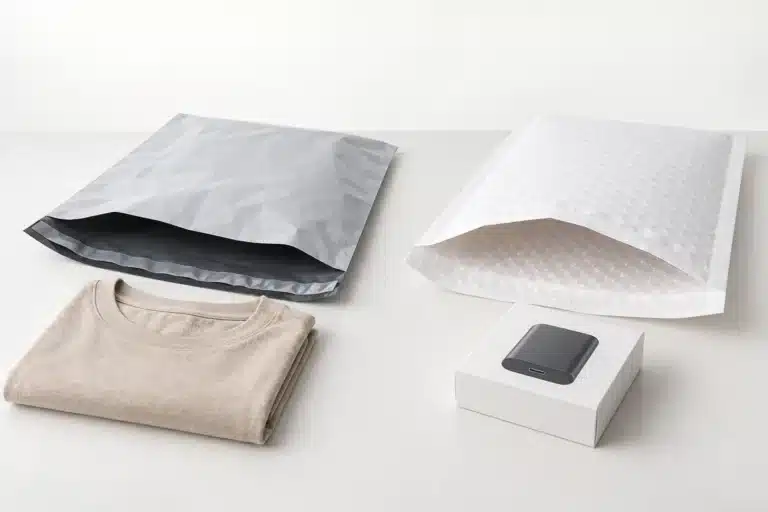
Poly mailers are ideal for soft, non-fragile goods, while bubble mailers add cushioning for products that need more protection.Choosing between poly mailers and bubble mailers affects more than the price of the bag. It can influence packing speed, parcel weight, storage space, product protection, and the condition in which an order reaches your customer.The quick answer is simple: use a poly mailer for soft or durable products that do not need cushioning, and use a bubble mailer for compact products that need protection from light impact and surface damage. If an item is fragile, heavy, sharp, or especially valuable, a corrugated box with suitable internal protection may be the safer option.This guide compares poly mailers and bubble mailers from a B2B purchasing perspective, so you can choose a packaging format based on product risk, total packing cost, shipping requirements, and branding needs.
What Is a Poly Mailer?
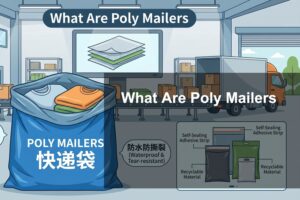
A poly mailer is a lightweight shipping bag made from polyethylene film. Most designs include a self-sealing adhesive strip and an opaque film that helps conceal the contents. Poly mailers are flexible, moisture-resistant, and easy to store in large quantities.
They are commonly used for:
- Apparel and fashion accessories
- Textiles and fabric products
- Soft home goods
- Documents or printed items with additional support
- Durable, non-fragile products that already have retail packaging
Because the film wraps closely around the contents, a poly mailer usually adds little bulk to a shipment. However, the bag itself does not provide cushioning against impact or compression.
What Is a Bubble Mailer?
A bubble mailer is a padded shipping envelope with an outer layer made from plastic film or paper and an inner bubble lining. The trapped air in the lining helps absorb light impact and reduces surface contact during handling.
Bubble mailers are commonly used for:
- Small electronic accessories in retail boxes
- Jewelry and accessories in protective cases
- Cosmetics in securely closed primary packaging
- Books, media, and printed products
- Small components that may be scratched in transit
The added padding provides more protection than an unpadded poly mailer, but it also increases unit cost, parcel thickness, storage volume, and material use. A bubble mailer is not automatically suitable for every fragile product. Product weight, drop risk, sharp edges, and the strength of the primary packaging still need to be evaluated.
Poly Mailers vs. Bubble Mailers: Key Differences
| Comparison Factor | Poly Mailers | Bubble Mailers |
|---|---|---|
| Cushioning | No built-in cushioning | Built-in bubble layer for light impact protection |
| Best suited for | Soft, flexible, and non-fragile goods | Small products needing extra surface and impact protection |
| Parcel weight | Usually lower | Usually higher because of the padded structure |
| Storage space | Compact and easy to stack | Requires more warehouse space |
| Unit packaging cost | Generally lower for comparable sizes and quantities | Generally higher because of the additional material and converting process |
| Moisture resistance | Common with polyethylene film construction | Depends on the outer material and sealing method |
| Custom printing | Available in multiple colors, print areas, and film finishes | Available, although structure and surface can affect print options |
| Recycling considerations | Depends on film composition and local collection systems | Depends on whether the outer layer and bubble lining can be collected together or separated locally |
The lowest-priced bag is not always the lowest-cost packaging choice. A better comparison includes packing labor, shipping charges, storage requirements, damage rates, and the value of the product inside.
Which Products Are Better for Poly Mailers?
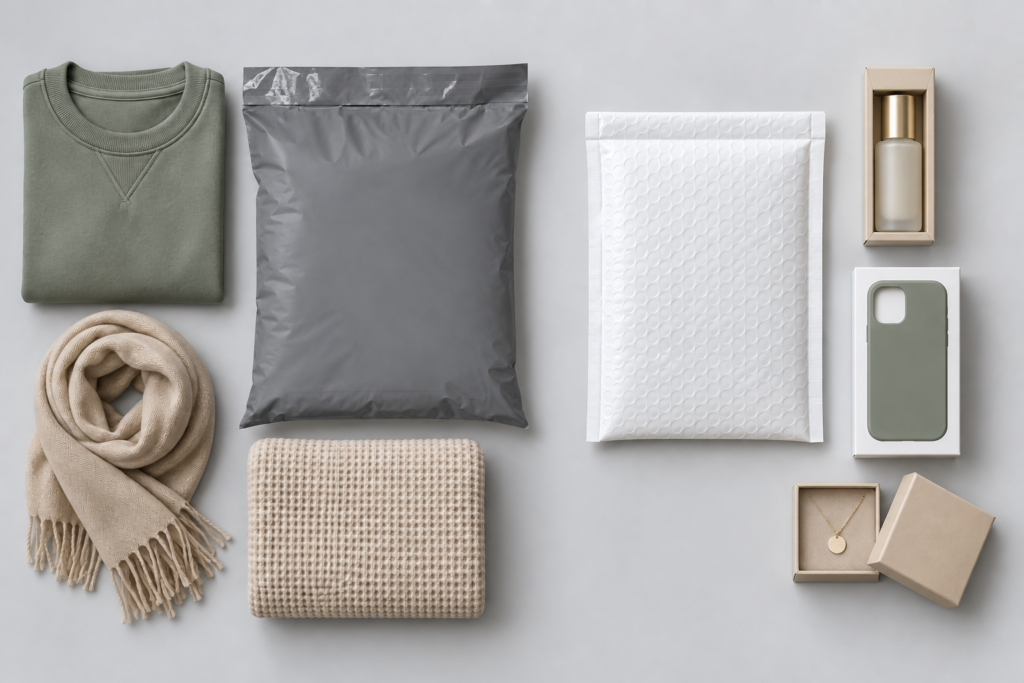
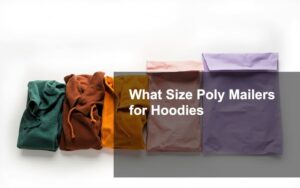
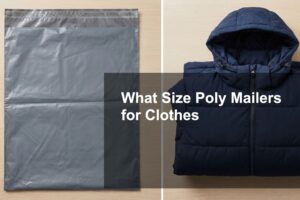
.Product fragility and existing retail packaging should guide the choice between an unpadded and padded mailer.Poly mailers work best when the product can tolerate normal parcel handling without additional cushioning. Typical examples include T-shirts, hoodies, socks, scarves, towels, bedding, and other soft goods.They may also be suitable for durable products already protected by a strong retail box. In this situation, the poly mailer serves as a lightweight outer shipping layer that provides privacy and moisture resistance. Before using this method at scale, test the complete packed product rather than judging the empty mailer alone.
Choose a poly mailer when:
- The product is soft, flexible, or difficult to break
- Surface scratching is not a major risk
- The item does not have sharp corners that may puncture the film
- Reducing parcel weight and packing time is a priority
- Compact packaging supports your shipping method
Which Products Are Better for Bubble Mailers?
Bubble mailers are a practical choice for small items that benefit from light cushioning but do not require the structure of a shipping box. Examples may include phone accessories, jewelry in boxes, packaged cosmetics, small hardware components, and media products.
Choose a bubble mailer when:
- The product can be scratched or dented during handling
- Light impact protection is needed around the item
- The product is compact and relatively lightweight
- Its primary packaging already provides some structure
- A box would add unnecessary space and packing materials
For glass containers, liquids, sharp metal parts, heavy items, and high-value electronics, test the full packaging system carefully. A padded envelope may need to be combined with a product box, sealing protection, or a corrugated shipping box.
Which Option Costs Less for B2B Orders?
For the same size and order quantity, a standard poly mailer will usually have a lower unit price than a bubble mailer because it uses a simpler, unpadded structure. The final quotation still depends on the full specification.
Key pricing factors include:
- Finished bag size
- Film or material thickness
- Outer and inner material structure
- Printing colors and print coverage
- Order quantity
- Adhesive strips, perforations, and other features
- Carton packing requirements
- Delivery destination and shipping terms
Buyers should compare the total packaging cost per shipped order, not only the bag price. For example, a lower-cost poly mailer may become expensive if it leads to preventable product damage. A bubble mailer may reduce the need for separate wrapping, but its added thickness can affect storage and freight efficiency.For a more detailed explanation of quotation variables, see our guide: How Much Are Poly Mailers? B2B Pricing Factors Explained.
Six Questions to Ask Before Choosing
1. Can the product break, dent, or scratch?
If the main risk is light surface damage, a bubble mailer may provide useful cushioning. If the item can crack, leak, or fail after a drop, evaluate a box-based solution.
2. Does the product already have protective packaging?
A strong retail box can change the shipping requirement. A durable boxed item may only need an outer poly mailer, while an unboxed item may need padding or a rigid container.
3. Does the item have sharp edges or corners?
Sharp points can puncture film and damage bubble cells. Add corner protection, choose a stronger structure, or use a box when necessary.
4. How important are parcel weight and storage space?
Poly mailers are thin and compact, which can support efficient warehouse storage and reduce packaging weight. Bubble mailers take up more space but may remove the need for a separate cushioning step.
5. What handling conditions will the parcel face?
Consider the carrier network, shipping distance, sorting equipment, weather exposure, and whether the parcel will be combined with heavier shipments. Test representative packed samples under realistic conditions.
6. What branding and material requirements apply?
Both formats can support custom colors and printing. If you plan to make recyclable, recycled-content, biodegradable, or compostable claims, confirm the material composition, applicable standards, documentation, and local disposal route before approving the artwork.
Custom Printing and Wholesale Options

Size, material structure, color, artwork, quantity, and packing requirements should be confirmed before production.Custom printing can turn either mailer type into branded ecommerce packaging. For an accurate quotation and a smoother approval process, prepare the following details:
- Mailer type: unpadded poly or bubble lined
- Internal or finished size
- Product weight and packed dimensions
- Material and thickness requirements
- Bag color and print colors
- Printing area and artwork file
- Estimated order quantity
- Delivery country, postal code, and preferred shipping terms
If you are unsure which construction is suitable, send your product dimensions, weight, photos, and current packaging method to the supplier. A sample evaluation is more reliable than choosing only from a catalog image.
Common Selection Mistakes
Choosing only by unit price
A small saving on each bag may be lost through slower packing, higher dimensional weight, or more damaged orders. Compare the cost of the complete packing method.
Using bubble mailers for highly fragile products
Bubble lining provides cushioning, but it does not create the rigid protection of a correctly sized corrugated box. Fragile products may need void fill, partitions, corner protection, or other controls.
Ignoring packed-product dimensions
Mailer dimensions are usually listed when the bag is flat. Product thickness uses part of the available width and length. Confirm the required usable size with a physical sample, especially for bulky clothing and boxed items.
Approving artwork before confirming the specification
Printing results can change with film color, surface finish, ink system, print coverage, and bag structure. Finalize the material and bag dimensions before approving production artwork.
A Simple Decision Guide
- Choose a poly mailer for apparel, textiles, and other soft or durable products when low weight, compact storage, and fast packing are priorities.
- Choose a bubble mailer for small, lightweight products that need added protection from light impact or scratching.
- Choose a corrugated box when the product is fragile, heavy, sharp, liquid-filled, or unable to withstand compression.
- Request samples and test the complete pack before placing a large custom order.
Are bubble mailers more expensive than poly mailers?
Usually, yes. Bubble mailers use a padded, multilayer structure and normally require more material and converting work. Size, material, printing, and order quantity can change the final difference.
Can I ship clothes in a bubble mailer?
You can, but most clothing does not need built-in cushioning. A standard poly mailer is often lighter, more compact, and more cost-efficient for apparel unless the garment includes delicate trims or accessories.
Can both types be custom printed?
Yes. Printing options depend on the material, surface color, artwork, print coverage, number of colors, and order quantity. Confirm the specification before requesting a final quote.
Are bubble mailers suitable for fragile items?
They can protect some lightweight items from minor impact and scratching. Highly fragile, heavy, sharp, or liquid-filled products usually need a more structured packaging system and appropriate testing.
Can a poly mailer protect a boxed product?
It can provide an outer layer against moisture, dirt, and casual viewing, but it does not add impact cushioning. The product box must be strong enough for the expected shipping conditions.
Final Recommendation
The right mailer depends on the protection your product actually needs. Poly mailers are a strong choice for soft, non-fragile goods and businesses that prioritize low weight, compact storage, and efficient packing. Bubble mailers suit smaller products that need added cushioning without the bulk of a shipping box.Before ordering in volume, compare representative samples using the real product, closure method, and shipping process. This helps confirm size, packing speed, appearance, and protection before mass production.Need help comparing specifications? Explore our self-sealing poly mailers and mailing bubble bags, or contact us with your product size, weight, order quantity, artwork, and delivery destination for a tailored quotation.