


Quick answer: All-plastic poly bubble mailers ARE recyclable, but only through store drop-off programs. Paper-faced bubble mailers are NOT recyclable at all due to their mixed-material construction.
If you sell products online or ship items regularly, bubble mailers have probably become part of your daily operations. Their lightweight design reduces shipping costs while the bubble cushioning protects contents from damage during transit. But when it comes time to dispose of them, the recyclability question creates confusion.
The answer is not straightforward. The term “bubble mailer” encompasses several different product types, and each has a different recyclability profile. This guide breaks down exactly which bubble mailers can be recycled, where to take them, and what alternatives exist for environmentally conscious shippers.
The Short Answer: It Depends on the Type
Poly bubble mailers are recyclable, but the answer depends entirely on how they are constructed. The two main categories behave very differently at end of life.
All-plastic bubble mailers are made entirely from polyethylene film with bubble cushioning sealed inside. This uniform plastic construction means they can be recycled alongside other plastic film products at participating retail locations. These are the mailers Amazon and most major ecommerce sellers use for lightweight product shipments.
Paper-faced bubble mailers feature a paper outer layer with plastic bubble cushioning attached to the inside. This hybrid construction looks more eco-friendly because of the paper exterior, but it is actually worse for recycling. The mixed materials cannot be separated economically, so these mailers go entirely to landfill.
The confusion is understandable. Paper-faced bubble mailers seem like they should be recyclable because they contain paper. However, recycling facilities cannot process materials where plastic and paper are bonded together. The presence of the plastic bubble layer contaminates the paper stream, and the paper layer contaminates the plastic stream.
Common misconception: Many consumers assume paper-faced bubble mailers are more recyclable than all-plastic ones. In reality, the opposite is true. The all-plastic version can be recycled; the paper-faced version cannot.
For more details on poly mailer options and their environmental properties, visit our comprehensive guide to poly mailers.
Types of Bubble Mailers and Their Recyclability
Understanding the specific construction of your bubble mailers is essential for proper disposal. Here is a detailed breakdown of the main categories.
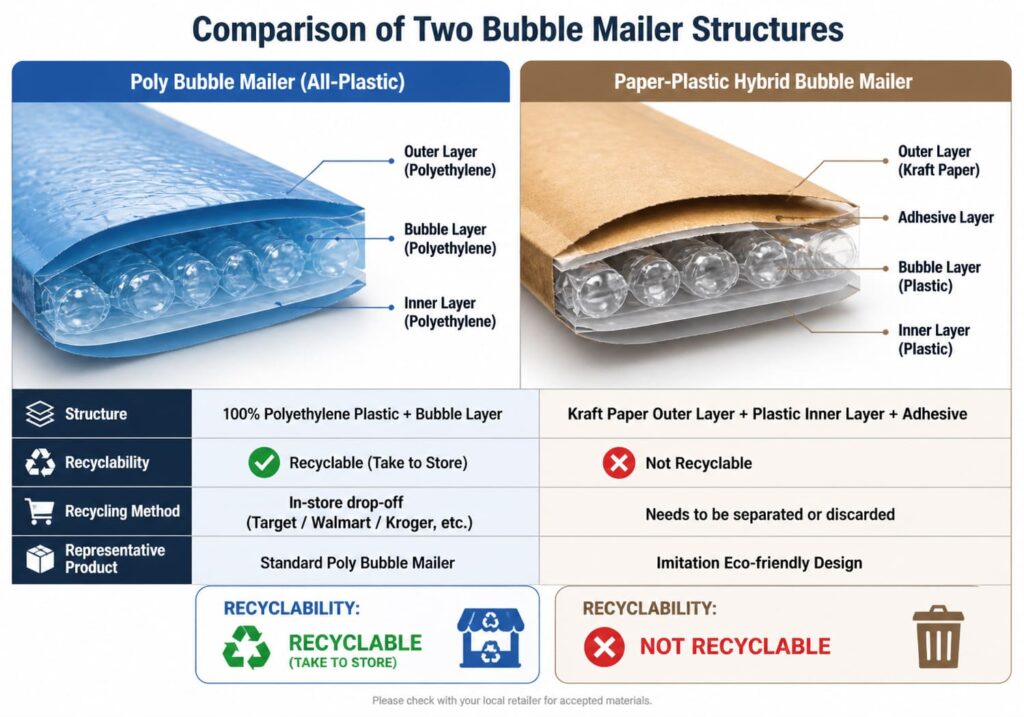
| Bubble Mailer Type | Material Construction | Recyclable? | How to Dispose |
|---|---|---|---|
| All-Plastic Poly Bubble Mailer | 100% polyethylene film with bubble cushioning | Yes (store drop-off) | Take to Target, Walmart, Kroger, etc. |
| Paper-Faced Bubble Mailer | Paper outer layer + plastic bubble interior | No | Reuse or dispose in trash |
| Kraft Bubble Mailer | Paper with laminated bubble padding | No | Reuse or dispose in trash |
| Reusable Bubble Mailer | Heavy-duty polyethylene with dual adhesive | Yes (after reuse lifecycle) | Store drop-off after multiple uses |
| Biodegradable Bubble Mailer | Polyethylene with additive for degradation | Yes (store drop-off) | Store drop-off – not curbside |
| Compostable Bubble Mailer | PLA/PBAT bio-polymers | Conditional | Industrial composting facility only |
Why the All-Plastic Version Works for Recycling
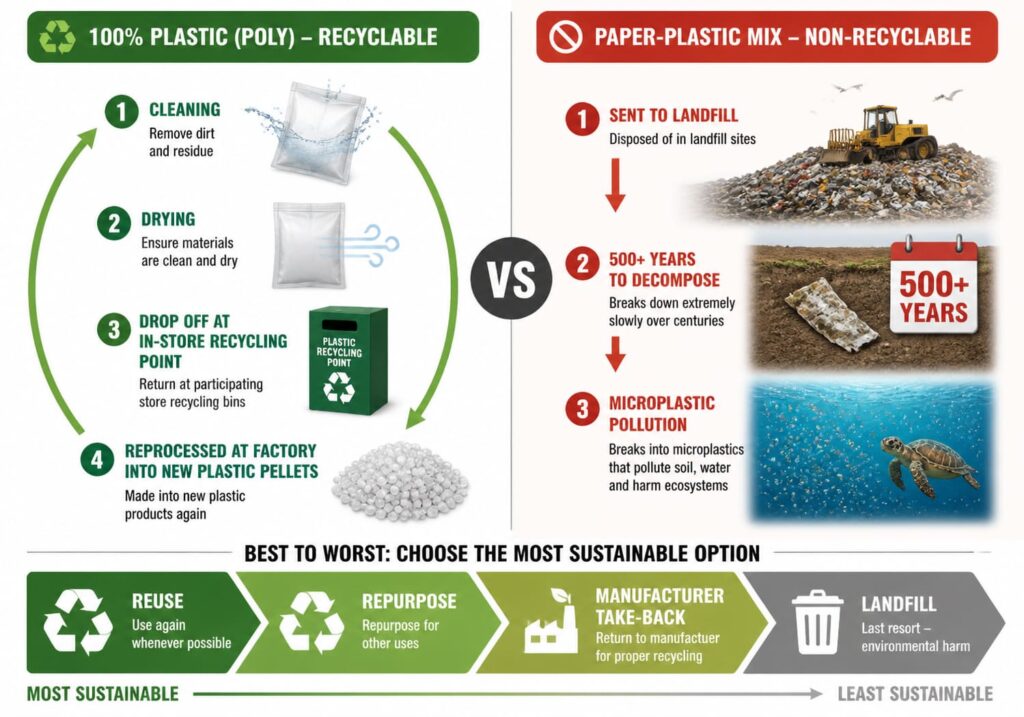
All-plastic bubble mailers work with recycling programs because they consist of a single material type. When processed at reclamation facilities, the polyethylene is washed, shredded, and converted back into reusable pellets. These pellets become raw material for new products, creating a true circular economy loop.
The plastic film recycling infrastructure has expanded significantly in recent years. Major retailers have invested in collection bins because the collected polyethylene has genuine market value. According to the Plastic Film Recycling organization, the material collected from these programs gets turned into composite lumber, new film products, and even new mailers.
Compare this to paper-faced bubble mailers, where the mixed construction means no recycling facility can profitably separate the materials. The additional processing cost makes separation economically unfeasible, which is why these products inevitably end up in landfill.
All-Plastic Bubble Mailers: Can They Be Recycled?
Yes, all-plastic bubble mailers are recyclable, but they require special handling that differs from standard curbside recycling. Understanding this distinction is critical for proper disposal.
The Curbside Problem
Standard curbside recycling trucks and Materials Recovery Facilities (MRFs) are designed to process rigid containers like bottles and cans. When flexible plastic films enter this system, they behave very differently.
Thin plastic films do not fall through sorting screens properly. Instead, they wrap around rotating equipment, tangle in mechanisms, and force expensive shutdowns. Workers must manually cut away tangled plastic, which is time-consuming and creates safety hazards. The result is contaminated batches of otherwise recyclable materials and costly processing delays.
This is why How2Recycle explicitly states that plastic films require separate collection and processing. The infrastructure for handling flexible films exists at specialized facilities that use different sorting technology, specifically air separation systems that can handle lightweight materials.
Where to Recycle All-Plastic Bubble Mailers
The solution is simple: take your clean, dry, label-free poly bubble mailers to participating retail locations. These stores have dedicated collection bins for plastic film recycling and partner with specialized processors who can handle the material.
- Target: Plastic bag recycling bins available at all store entrances
- Walmart: Collection bins near customer service or entrance areas
- Kroger: Most locations participate in film recycling programs
- Safeway/Albertsons: Participating locations accept clean poly film
- Whole Foods: Dedicated plastic film recycling stations
- Costco: Warehouse locations with collection bins
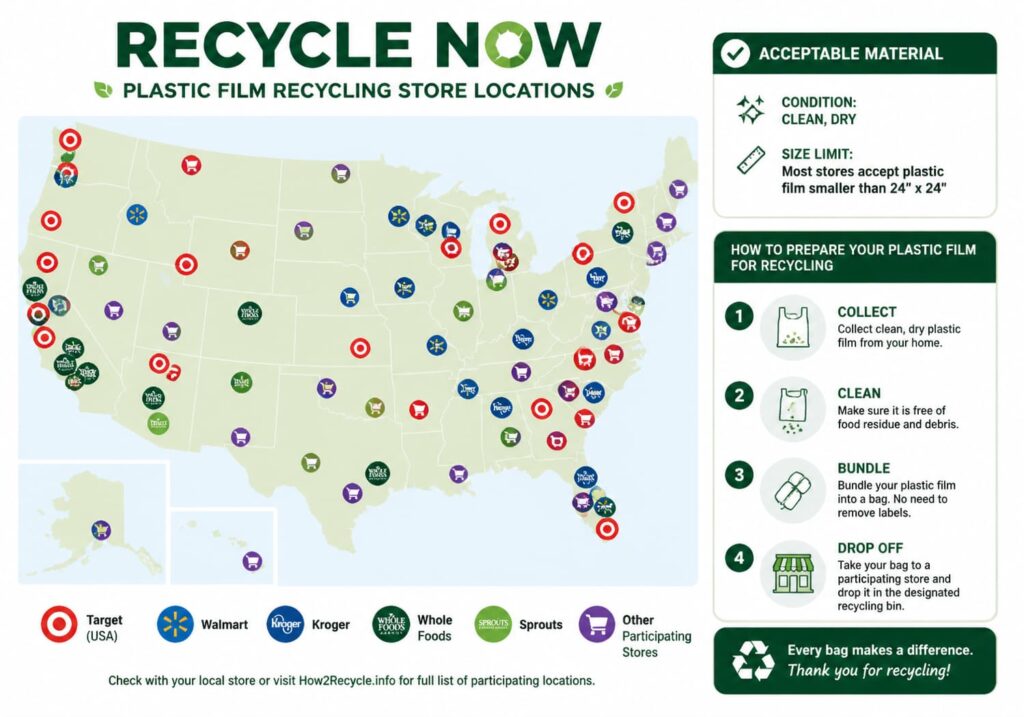
Pro tip: Combine your bubble mailer recycling with your regular grocery trip. Keep a reusable bag near your shipping station, fill it with clean poly film, and bring it along on your next store run.
Preparation Steps for Recycling
Proper preparation matters. Skipping these steps can result in your bubble mailers being rejected or contaminating the recycling stream.
1 Remove All Paper Labels and Stickers
Shipping labels, barcode stickers, and address labels are paper coated with adhesive. These components do not belong with polyethylene film recycling and will contaminate the batch. Peel them off completely before recycling.
2 Pull Off Excessive Tape
Packing tape, especially clear polypropylene tape, is not compatible with polyethylene recycling. Remove tape strips longer than 2 inches. Small amounts of tape residue are acceptable, but heavily-taped mailers should have the worst of it removed.
3 Ensure Clean and Dry
Any food residue, moisture, or foreign materials disqualify poly bubble mailers from recycling. Wipe clean with a dry cloth if needed. For mailers that held items with spills or strong odors, reuse or dispose in regular trash instead of recycling.
4 Keep the Adhesive Strip Intact
The self-sealing adhesive strip on poly bubble mailers IS recyclable polyethylene. Do not peel it off. The adhesive is part of the recyclable material and will be washed away during processing.
What happens next: Collected poly bubble mailers are baled and sent to reclamation facilities. They are washed to remove contaminants, shredded into small flakes, and processed into recycled polyethylene pellets. These pellets become raw material for new products including composite lumber, automotive parts, and new poly mailers.
Paper-Faced Bubble Mailers: The Problem with Recycling
Paper-faced bubble mailers are deceptively problematic. Their appearance suggestseco-friendliness, but the hybrid construction makes them impossible to recycle through standard programs. Here is why these mailers are not recyclable.
The Mixed Material Problem
Paper-faced bubble mailers consist of at least two distinct material types bonded together: a paper outer layer and a plastic bubble cushioning layer on the inside. When these materials enter a recycling facility, they cannot be efficiently separated.
At a paper recycling facility, the plastic bubble layer contaminates the paper pulp. The plastic does not break down with the paper, creating defects in the recycled paper product that make it unusable. Similarly, at a plastic recycling facility, the paper layer cannot be processed alongside polyethylene and creates contamination.
The bonding agent used to attach the paper to the bubble cushioning creates additional problems. This adhesive further contaminates both material streams and makes any recovered material lower quality. The economic reality is that separating these materials costs more than the resulting recycled materials are worth.
Why They Look Recyclable
The Kraft paper exterior gives paper-faced bubble mailers an eco-friendly appearance that is misleading. Many consumers assume that because the outer layer looks like standard paper, the entire mailer can be recycled with cardboard and other paper products.
This assumption is reinforced by the fact that some paper-faced bubble mailers display recycling symbols or environmental claims. However, the presence of these symbols does not mean the product is curbside recyclable. Always check for specific disposal instructions rather than relying on generic symbols.
Red flag: If a bubble mailer has a paper exterior but you can feel bubble cushioning underneath, it is likely non-recyclable. The smooth paper texture over rigid bubbles is the visual indicator of mixed construction.
Why Manufacturers Still Use This Design
If paper-faced bubble mailers are non-recyclable, why do manufacturers still produce them? The answer involves several factors.
Perceived eco-friendliness: Paper exteriors appeal to consumers who associate paper with sustainability. This marketing advantage often outweighs the environmental downside of non-recyclability.
Printability: Paper surfaces accept ink better than plastic, allowing for higher quality custom printing and branding. Retailers and brands often prioritize this aesthetic benefit.
Stiffness and structure: Paper-faced mailers maintain their shape better than all-plastic versions, which some shippers prefer for certain product types.
Cost: In some cases, paper-faced construction can be cheaper than all-plastic alternatives, though this varies by supplier and order volume.
If you currently use paper-faced bubble mailers, consider switching to all-plastic versions. The environmental benefit of recyclability outweighs any perceived advantage of the paper exterior. For guidance on making the switch, see our article on eco-friendly packaging alternatives.
How to Properly Dispose of Non-Recyclable Bubble Mailers
When you have paper-faced bubble mailers or contaminated poly bubble mailers that cannot be recycled, proper disposal becomes important. Here are the best options, ranked by environmental impact.
Option 1: Reuse Before Disposing
The most environmentally responsible approach is to reuse bubble mailers multiple times before disposing of them. Unlike some packaging materials, bubble mailers maintain their protective properties through several shipping cycles.
Reuse ideas:
- Use them for your own outgoing shipments
- Store them for returns or shipping items you sell on secondary marketplaces
- Use them for protecting items during household moves
- Save them for shipping items to friends or family
If you receive products in paper-faced bubble mailers, save them for your own shipping needs. This extends their useful life and delays their journey to landfill.
Option 2: Repurpose for Protection
Bubble mailers serve well as protective packaging even after they can no longer be used for shipping. Consider these alternative uses.
- Moving protection: Wrap delicate items in bubble mailers for padding during moves
- Storage cushioning: Use them to protect items in storage units
- Gardening: Place bubble mailers in pots to improve drainage and insulation for plants
- Insulation: Use them as a lightweight insulation layer in craft projects or temporary weatherproofing
Option 3: Check for Manufacturer Take-Back Programs
Some manufacturers and retailers have implemented take-back programs for their packaging materials. These programs collect used packaging and either recycle it through specialized channels or repurpose it internally.
Contact the manufacturer or check their website to see if they offer packaging recovery programs. Major ecommerce platforms and fulfillment services are increasingly offering these options as part of their sustainability commitments.
Option 4: Responsible Landfill Disposal
When reuse is not feasible and recycling is not an option, dispose of non-recyclable bubble mailers in regular trash. While this is the least ideal option, it is better than contaminating recycling streams.
Contamination has real costs. When non-recyclable materials enter the recycling stream, they can ruin entire batches of otherwise recyclable materials. A single contaminated load can cost taxpayers thousands in extra processing fees and can result in perfectly good recyclables being sent to landfill.
Remember: When in doubt, throw it out. It is better to send a non-recyclable bubble mailer to landfill than to contaminate an entire recycling batch with materials that do not belong.
For more sustainable shipping options, explore our selection of shipping supplies that prioritize environmental responsibility.
Eco-Friendly Alternatives to Traditional Bubble Mailers
If recyclability is a priority for your brand or your personal shipping needs, several alternatives to traditional bubble mailers offer better environmental profiles. Each option has distinct trade-offs in cost, performance, and end-of-life outcomes.
Best Overall Recyclability
Recycled Content Poly Bubble Mailers
Made from post-consumer recycled polyethylene, these mailers divert plastic from landfills and require less energy to produce than virgin materials. Look for certifications like RCS (Recycled Claim Standard) to verify recycled content. Premium options contain 50% or more recycled material.
Recyclability: Same as standard poly bubble mailers (store drop-off required)
Best for: Brands committed to circular economy principles
Best for Specific Situations
Compostable Bubble Mailers
Made from PLA/PBAT bio-polymers derived from plant sources, these mailers break down completely under industrial composting conditions. They require specialized facilities that maintain specific temperature and humidity levels, typically not available in home composting setups.
Compostability: Industrial facility required (not home composting)
Best for: Brands targeting zero-waste certifications or customers with industrial composting access
Best for Branding
Paper-Based Padded Mailers
Innovative new padding materials made from recycled paper or cardboard offer protection without plastic components. These use paper-based cushioning systems like corrugated or paper wrap to provide protection. Check carefully for true recyclability as some still contain plastic components.
Recyclability: Varies by product – check specifications carefully
Best for: Brands emphasizing natural or paper-based packaging aesthetics
Making the Switch: Practical Considerations
Transitioning to more sustainable bubble mailer options requires evaluating several factors beyond just recyclability.
Cost differential: Recycled content and compostable options typically cost 20-50% more than standard poly bubble mailers. Factor this into your shipping cost calculations and consider whether your customers will absorb higher shipping costs.
Performance requirements: Ensure alternative materials provide adequate protection for your specific products. Request samples and conduct drop tests before committing to large orders.
Supply chain availability: Some eco-friendly options have longer lead times or minimum order quantities. Plan your transition to avoid running out of packaging materials.
Customer communication: Let your customers know about the environmental benefits of your packaging choices. Many consumers appreciate sustainability efforts and may even share positive experiences on social media.
Our recommendation: For most ecommerce situations, recycled content poly bubble mailers offer the best balance of environmental benefit, practical recyclability, and cost. They reduce virgin plastic demand while maintaining standard store drop-off recycling that customers can easily access.
Frequently Asked Questions
Are poly bubble mailers recyclable?
It depends on the construction. All-plastic bubble mailers made from 100% polyethylene ARE recyclable at store drop-off locations. However, paper-faced bubble mailers with plastic bubble cushioning inside are NOT recyclable because the mixed materials cannot be separated. The bubble wrap inside also contaminates the paper stream.
Can you put bubble mailers in curbside recycling?
No, bubble mailers should NOT go in curbside recycling bins. Whether plastic or paper-faced, standard curbside recycling facilities cannot process bubble mailers. Thin plastic films tangle in sorting machinery at Materials Recovery Facilities, causing shutdowns and contaminating other recyclables. Paper-faced versions contain mixed materials that cannot be separated.
What types of bubble mailers can be recycled?
Only all-plastic bubble mailers made from 100% polyethylene (LDPE #4) can be recycled, and only through store drop-off programs at retailers like Target, Walmart, and Kroger. Paper-faced, padded, and laminated bubble mailers cannot be recycled through any standard program due to their mixed-material construction.
Where can I recycle poly bubble mailers?
Take clean, dry, label-free poly bubble mailers to store drop-off locations at major retailers including Target, Walmart, Kroger, Safeway, Whole Foods, and Costco. Look for plastic film recycling bins typically found near store entrances or customer service areas. Combine with other clean plastic films like grocery bags for efficient drop-off.
Are bubble mailers eco-friendly?
Traditional bubble mailers are not considered eco-friendly due to their plastic composition. However, all-plastic versions ARE recyclable through store drop-off programs, which is better than landfill disposal. For better environmental impact, look for recycled content bubble mailers or reusable alternatives that extend the product lifecycle.
What can I do with non-recyclable bubble mailers?
For non-recyclable bubble mailers: 1) Reuse them for shipping or storage multiple times, 2) Use them as protective packaging for moving or storage, 3) Check if manufacturers offer take-back programs, or 4) Dispose of them in regular trash as a last resort to avoid contaminating recycling streams.
What is the difference between poly bubble mailers and paper bubble mailers?
Poly bubble mailers are made entirely from plastic (polyethylene) and are recyclable at store drop-off. Paper bubble mailers have a paper outer layer with plastic bubble cushioning inside – this mixed construction makes them non-recyclable because the materials cannot be economically separated. Despite the paper exterior appearing more eco-friendly, paper-faced versions have worse recyclability than all-plastic ones.
Are reusable bubble mailers worth it?
Yes, reusable bubble mailers are worth considering for high-volume shippers or subscription services. Designed with dual adhesive strips for multiple uses, they significantly reduce per-shipment environmental impact. After their extended useful life, they can be recycled through store drop-off programs just like standard poly bubble mailers.
Ready to eliminate seal failures and size mismatches from your supply chain?
Planning to purchase poly mailers in bulk? Send us your size, thickness, quantity and destination requirements.Request a formal quote with your specifications. Response within 4 business hours.
RHK Packaging — ISO 9001:2015 Certified Manufacturer Since 2010
[email protected]