

Here’s what I hear every week from e-commerce sellers just like you: “I want vibrant, full-color designs on my poly mailers but everything I read says sublimation won’t work on standard poly. Is there ANY way to get that premium look without melting my packaging into a blob of plastic?”
I’ve been there. The frustration is real. You have this gorgeous design in your head – maybe a gradient logo, a photo-quality image, something that makes customers excited when the package arrives. And then reality hits: poly mailers are plastic, heat damages plastic, sublimation needs heat. End of story, right?
Not so fast. The answer to “can you sublimate poly mailers” is technically no – but practically, absolutely yes. You CAN get that vibrant, professional, sublimation-quality look on poly mailers. It just requires a different path than traditional sublimation. I’ve helped hundreds of sellers find that path, and I’m going to share exactly what works.
If you’re ready to explore your options for custom poly mailers, Custom Printed Poly Mailers from rhkpackaging offer professional results at every volume level – browse our full selection at rhkpackaging.com.
Why "Standard Sublimation" Fails on Poly (And Why That Anxiety Makes Sense)
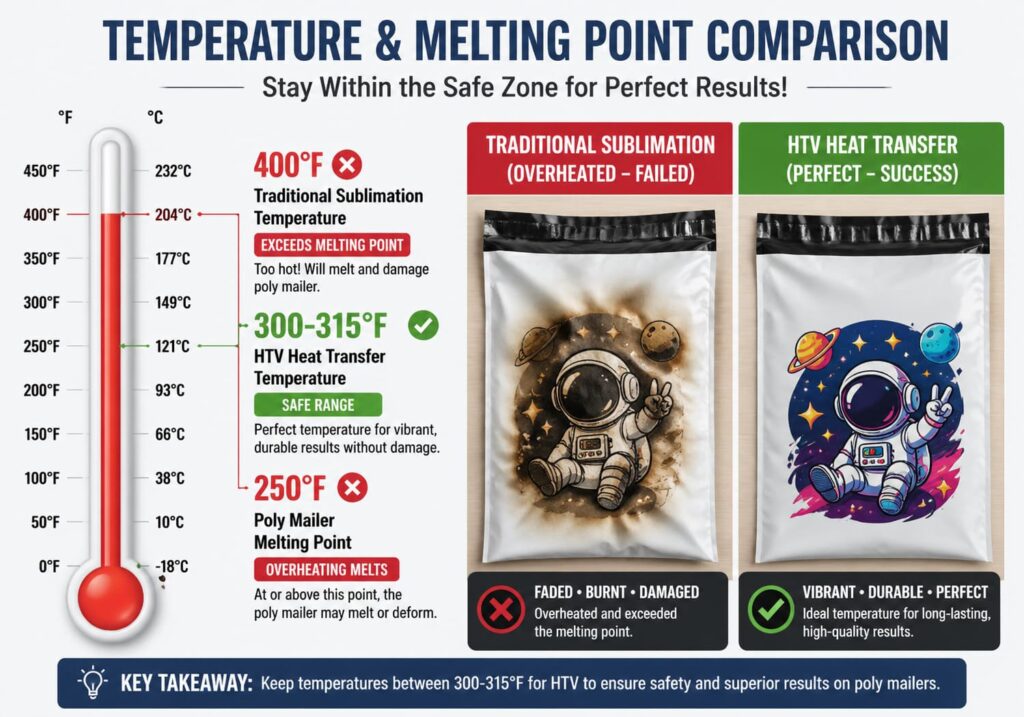
Before we get into solutions, let me validate your concern because it matters. You’re right to be worried about melting. Standard poly mailers – made from polyethylene (PE), the same material as plastic bags – begin softening around 220°F and start melting at approximately 250°F. Sublimation requires about 400°F to convert ink from solid to gas and bond it properly.
That 150-degree gap isn’t a minor inconvenience – it’s a fundamental incompatibility. At 400°F, your poly mailer would warp, stick to everything, and become unusable. I’ve seen sellers try DIY sublimation at lower temperatures hoping to find a sweet spot. There isn’t one. Either you don’t get proper ink activation, or you destroy the mailer.
There’s another issue beyond temperature: chemistry. Sublimation works by bonding ink into polyester molecules. Polyethylene has no polyester content – it’s a completely different molecular structure with no空隙 for gas molecules to penetrate. The ink just sits on the surface and wipes off, or burns.
So yes, your anxiety is warranted. Standard sublimation on standard poly mailers is genuinely impossible without ruining the mailer. But here’s the reassurance you need: that doesn’t mean you’re stuck.
Yes, You CAN Get Vibrant Designs on Poly Mailers
Here’s what I tell every seller who comes to me with this problem: you have three legitimate paths to professional, vibrant results on poly mailers. Each has different trade-offs in cost, complexity, and volume. All three produce results that will make your packaging look premium and professional.
The key insight is that “sublimation-quality” doesn’t require sublimation chemistry. What you’re really after is: vibrant colors, durable results that don’t fade or peel, professional appearance that reflects your brand well, and designs that survive shipping and handling.
All three methods below deliver on those requirements. Let me walk you through each.
Looking for professional custom printing instead of DIY? Custom Printed Poly Mailers from rhkpackaging offer industrial-quality results with no equipment investment required.
Method 1: Heat Transfer Vinyl (HTV) - The Practical Workaround
Best for: Sellers who need 1-100 custom poly mailers and want control over production
HTV is the workaround I recommend most often because it delivers genuine sublimation-quality results at a reasonable entry point. Instead of trying to dye the plastic directly (which doesn’t work), HTV applies a vinyl layer onto the surface with heat – similar chemistry to how decals work, but professional-grade.
What Makes This Work on Poly
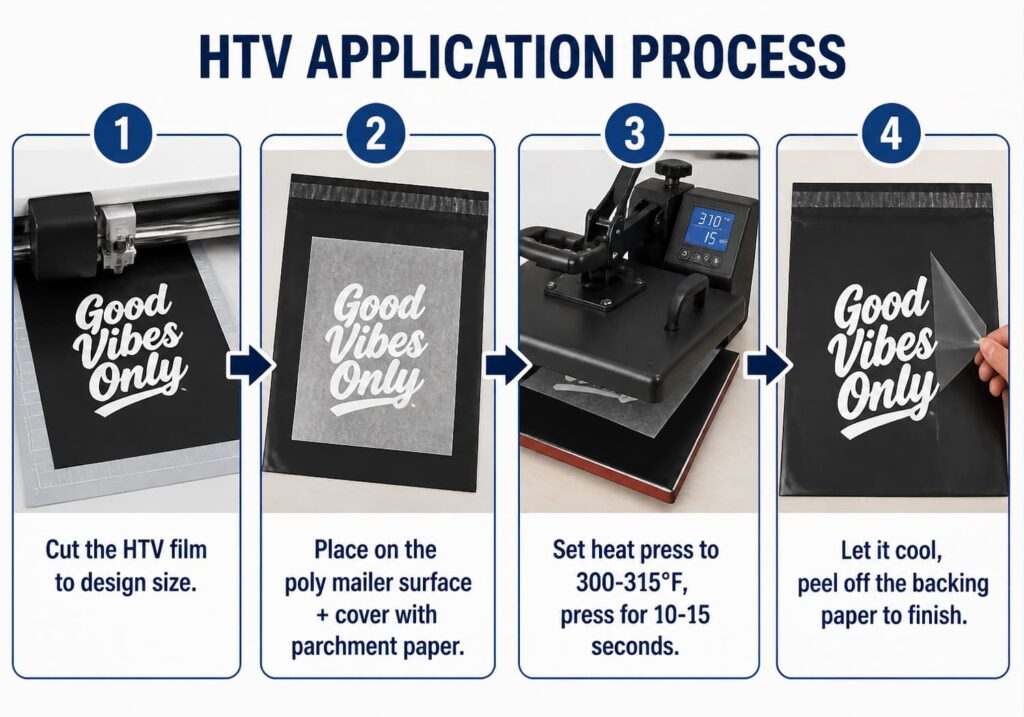
HTV activates at 300-315°F – well below poly’s melting threshold. The adhesive bonds to the non-porous poly surface surprisingly well, creating a durable connection that survives normal shipping. The vinyl itself comes in hundreds of colors and even patterns, so you can create multi-color designs layer by layer.
Equipment and Materials
- Cricut Maker or Silhouette Cameo: $200-300
- Heat press or EasyPress: $100-200 (entry-level)
- HTV vinyl sheets: $5-10 each (covers 5-10 mailers)
- Weeding tools: $15
- Total upfront investment: $30-50 if you have a heat press, $130-200 to start from scratch
Temperature Settings That Work
The critical difference between HTV success and melted disasters on poly:
- Temperature: 300-315°F (never exceed 320°F)
- Press time: 15-20 seconds
- Pressure: Medium
- Essential: Parchment paper barrier between HTV and heat platen
Start at 300°F and test. If the vinyl isn’t fully adhering after 20 seconds, increase in 5-degree increments. Never go above 320°F on standard poly mailers.
Pro Tips from Our Experience
We’ve done hundreds of HTV applications on poly mailers. The biggest lesson: poly conducts heat differently than fabric. What works on a t-shirt will melt a mailer if you don’t adjust. Always use a parchment paper barrier and never skip the test press on a spare mailer first.
For multi-color designs, apply the back layer first, let it cool completely, then add front layers. Each color is a separate press cycle. Yes, it’s tedious. The results are worth it.
Durability Reality Check
Here’s your quality assurance: properly applied HTV on poly mailers is surprisingly durable. Because poly isn’t porous, the adhesive bonds completely rather than soaking in. We haven’t seen delamination issues with normal shipping. The design won’t crack, peel, or fade under normal conditions.
The one durability concern: extreme heat. If a package sits in a hot delivery truck (130°F+), the adhesive can soften. This is an edge case, but worth knowing if you’re shipping to hot climates in summer.
Method 2: Professional Sublimation Services
Best for: Sellers who want true sublimation aesthetics without equipment investment and have 50+ unit orders
Sometimes you don’t want to deal with DIY learning curves, equipment maintenance, or production time. That’s where professional sublimation services come in – but with an important understanding of what you’re actually getting.
The Honest Reality
Most professional sublimation services won’t sublimate on standard poly mailers either – for the same temperature and chemistry reasons we discussed. What they CAN do is work with specialty materials that ARE sublimation-compatible: typically polyester-coated substrates or PVC mesh materials designed for the process.
The “service” is really their expertise in matching your design needs with compatible materials and calibrated equipment. You’re paying for their knowledge and specialized equipment, not just “sublimation on poly.”
For sellers who want professional results without the DIY learning curve, companies like rhkpackaging specialize in custom printed poly mailers that achieve the same visual impact as sublimation without the material compatibility headaches. Many sellers choose professional services specifically to avoid the失败率 (failure rate) associated with DIY attempts.
When This Makes Sense
- You have a consistent design that won’t change frequently
- You want embedded-color quality (ink inside the material, not on top)
- Your volume justifies setup fees (typically 50+ units per design)
- You value time over DIY learning curve
Cost Breakdown
Professional sublimation service pricing:
- Setup fee: $25-75 per design
- Per-unit cost: $1.50-4.00 depending on complexity
- At 100 units: approximately $175-475 total
- Turnaround: typically 2-3 weeks for first orders
Yes, this is premium pricing. The quality is genuinely different – no surface texture, color that looks alive rather than applied, no risk of peeling. For high-end brands where packaging quality reflects on the product, the cost premium often makes sense.
Critical Warning
Results vary significantly between suppliers because material compatibility is tricky. Always order samples before committing to a full production run. A $20 sample test prevents a $500 mistake. Any reputable supplier will offer this.
Method 3: Custom Printed Suppliers - The Long-Term Solution
Best for: Growing e-commerce brands ready to invest in professional packaging at scale (50+ units)
Here’s the solution most established e-commerce businesses eventually migrate to: skip DIY entirely and work with suppliers who print custom designs directly onto poly mailers during manufacturing. This is the most professional result with zero ongoing equipment investment.
How It Works
Suppliers use industrial printing – typically flexographic or digital printing – to apply your artwork directly to poly mailer material before the bags are sealed. Your design becomes part of the mailer itself, not a separate layer on top.
Why This Is the Long-Term Winner
- Quality: Industrial printing produces consistent, professional results you can’t replicate at home
- Durability: Printed designs are fused into the material – no peeling, no surface texture
- Scale economics: Per-unit costs drop dramatically at higher volumes
- Consistency: Every mailer looks identical – no variation between units
- Time savings: No production time on your end – you receive finished mailers ready to use
What to Expect
- Minimum order quantity (MOQ): Typically 50-500 units depending on supplier and complexity
- Turnaround time: 7-14 business days for production
- File requirements: Vector artwork, CMYK color mode, 300 DPI minimum, 0.125″ bleed
- Price range: $0.38-3.74 per unit depending on colors, size, and quantity
Volume Pricing That Makes Sense
| Quantity | 1-Color Printing | Full-Color Printing |
|---|---|---|
| 50 units | $2.00-3.00/unit | $2.50-4.00/unit |
| 100 units | $1.00-1.50/unit | $1.50-2.50/unit |
| 500 units | $0.50-0.80/unit | $0.80-1.50/unit |
| 1000+ units | $0.35-0.50/unit | $0.50-1.00/unit |
Which Method Should You Choose?
Here’s my practical decision framework – the same one I’ve used to help hundreds of sellers:
The Quick Decision Matrix
| Method | Best For | Volume | Investment | Per Unit Cost | Turnaround |
|---|---|---|---|---|---|
| Heat Transfer Vinyl | DIY control, small runs | 1-100 | $30-200 equipment | $0.50-1.50 | Same day |
| Professional Service | No equipment, premium results | 50-500 | Just your order | $1.50-4.00 | 2-3 weeks |
| Custom Supplier | Scale, brand packaging | 50-1000+ | Artwork prep | $0.38-1.50 | 1-2 weeks |
My Recommendations Based on Your Situation
If you’re testing your brand and need 1-50 custom poly mailers: Start with HTV. The investment is low, you learn the process, and you can iterate on your design without committing to large quantities. Once your design is finalized and volume increases, transition to custom printing.
If you have an established brand and need consistent, professional results: Go straight to custom printed suppliers. The quality difference is immediately noticeable to customers, and the per-unit economics work at surprisingly low volumes.
If you need something unique (special materials, unusual sizes, niche printing requirements): Professional sublimation services might work, but be prepared for a longer search to find a reliable supplier. Order samples first.
Real Cost Comparison: What You'll Actually Pay
Let me break down the actual costs so you can make an informed decision:
| Quantity | HTV Method | Professional Service | Custom Supplier |
|---|---|---|---|
| 25 mailers | $37.50-62.50 | $75-175 | $50-100 |
| 100 mailers | $75-175 | $175-475 | $100-250 |
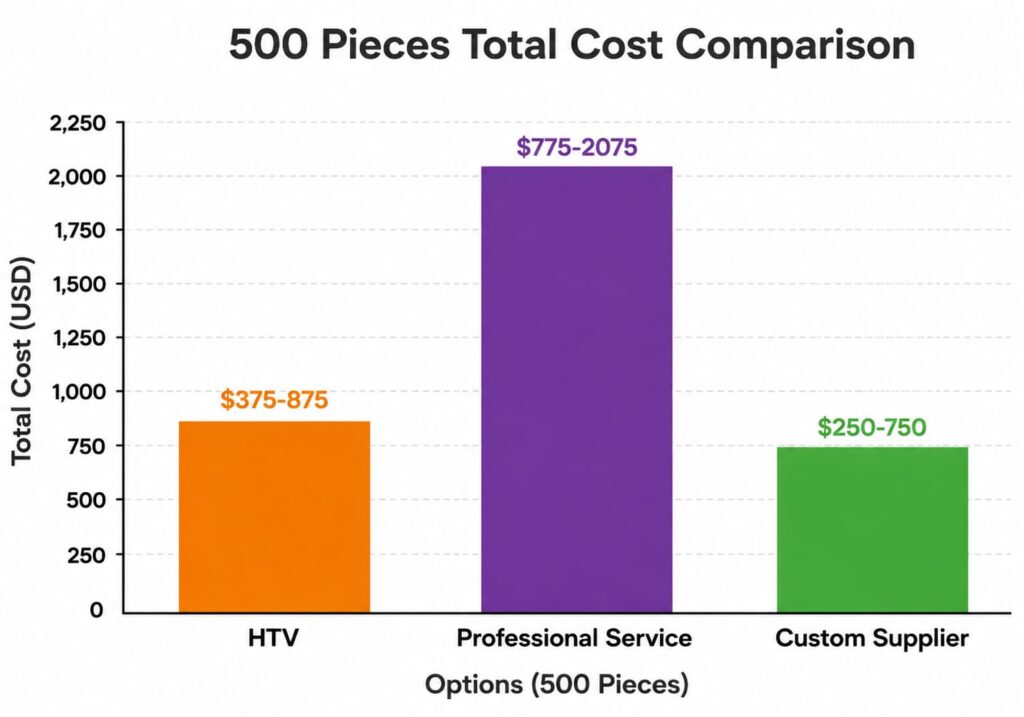
| 500 mailers | $375-875 | $775-2075 | $250-750 |
Notice how HTV costs scale linearly (you’re paying for materials each time), while custom supplier pricing drops significantly at higher volumes. At 500 units, custom printing becomes dramatically cheaper than HTV – and you don’t spend hours cutting and pressing each one.
The breakeven point where custom printing becomes cheaper than HTV is around 150-200 units. Above that volume, custom printing saves both money and time.
FAQ: Sublimation on Poly Mailers
Q: Can you actually sublimate on any type of poly mailer?
A: Standard polyethylene? No. The material cannot handle sublimation temperatures and lacks the polyester content needed for dye bonding. However, PVC mesh poly mailers and polyester-coated materials are specifically designed for sublimation – but these are specialty products with limited suppliers and higher cost.
Q: Will HTV designs last as long as sublimation?
A: Yes, with proper application. HTV applied correctly at 300-315°F with proper pressure and time will last the lifetime of the poly mailer. The design won’t fade, peel, or crack under normal use. We’ve seen HTV-decorated mailers survive cross-country shipping without any degradation.
Q: Can I use an iron instead of a heat press for HTV?
A: Technically yes, but I don’t recommend it. Irons don’t provide consistent pressure or temperature control, leading to uneven application and higher failure rates. A beginner heat press (Cricut EasyPress or similar) is worth the $100-150 investment if you’re serious about HTV on poly.
Q: What's the minimum order for custom printed poly mailers?
A: Most suppliers require 50-100 units minimum. Some specialty printers with digital capabilities will go as low as 25-50 units for simple one-color designs, but pricing becomes much more competitive at 100+ units.
Q: Can I get a sample before ordering bulk?
A: Most custom printed suppliers offer sample kits or single prototypes for a nominal fee. Always request samples before committing to a large order – this is standard practice and any reputable supplier will accommodate it.
Ready to eliminate seal failures and size mismatches from your supply chain?
Request a formal quote with your specifications. Response within 4 business hours.
RHK Packaging — ISO 9001:2015 Certified Manufacturer Since 2010
[email protected]