

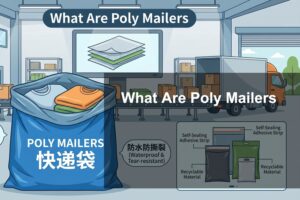



Critical distinction: Poly mailers ARE recyclable, but NOT in your curbside recycling bin. Most consumers get this wrong, and it is the single biggest reason poly mailers end up in landfills.
If you have been putting poly mailers in your curbside recycling bin, you are not alone. A significant portion of consumers do the same thing, believing they are doing the right thing for the environment. Unfortunately, this well-intentioned mistake actually contaminates the recycling stream and can cause entire batches of otherwise recyclable materials to be sent to landfill.
This guide explains exactly why curbside recycling does not work for poly mailers, where to take them instead, and how to prepare them properly so they actually get recycled into new products.
The Short Answer: Yes, But Not in Your Curbside Bin
Poly mailers are absolutely recyclable. However, they require specialized recycling processes that standard curbside pickup cannot handle. The thin polyethylene film that makes poly mailers lightweight and flexible is exactly what causes problems at Materials Recovery Facilities (MRFs).
According to the Plastic Film Recycling organization, poly mailers fall under “plastic film” recycling, which must be processed separately from rigid plastics like bottles and containers.
Why it matters: When poly mailers enter the curbside stream, they tangle in sorting equipment, force shutdowns at recycling facilities, and contaminate batches of otherwise recyclable materials. One contaminated load can cost taxpayers thousands in extra processing fees.
The solution is simple: store drop-off recycling. Most major grocery chains and retail stores accept clean, dry poly mailers alongside plastic grocery bags. This separate stream has the specialized equipment needed to process thin plastic films.
What Are Poly Mailers Made Of?
Understanding the material composition helps explain why poly mailers need special handling. Most poly mailers are made from one of three types of plastic, each with different properties and recycling codes.
Understanding Polyethylene: LDPE, HDPE, and PP
Low-Density Polyethylene (LDPE #4) is the most common material for poly mailers. Its flexibility and durability make it ideal for shipping applications. LDPE is also used for plastic grocery bags, bread bags, and garment bags.
High-Density Polyethylene (HDPE #2) is stiffer and more chemical-resistant. Some premium poly mailers use HDPE for better puncture resistance. You will recognize HDPE from milk jugs and detergent bottles.
Polypropylene (PP #5) offers higher temperature resistance and clarity. PP is increasingly used in food-grade applications and some specialty mailers. It has better resistance to chemicals than LDPE.
For a comprehensive comparison of shipping boxes vs envelopes, including environmental considerations, visit our detailed guide.
Why Recycling Codes Matter (#4 and #5)
The recycling code number on a product does not indicate “recyclability” in the curbside sense. It identifies the plastic resin type for specialized recyclers. Here is the critical distinction:
| Code | Material | Common Uses | Curbside OK? | Store Drop-off? |
|---|---|---|---|---|
| #4 | LDPE | Poly mailers, grocery bags, bread bags | No | Yes |
| #2 | HDPE | Milk jugs, detergent bottles | Yes | Yes |
| #5 | PP | Yogurt cups, medicine bottles, some mailers | Sometimes | Yes |
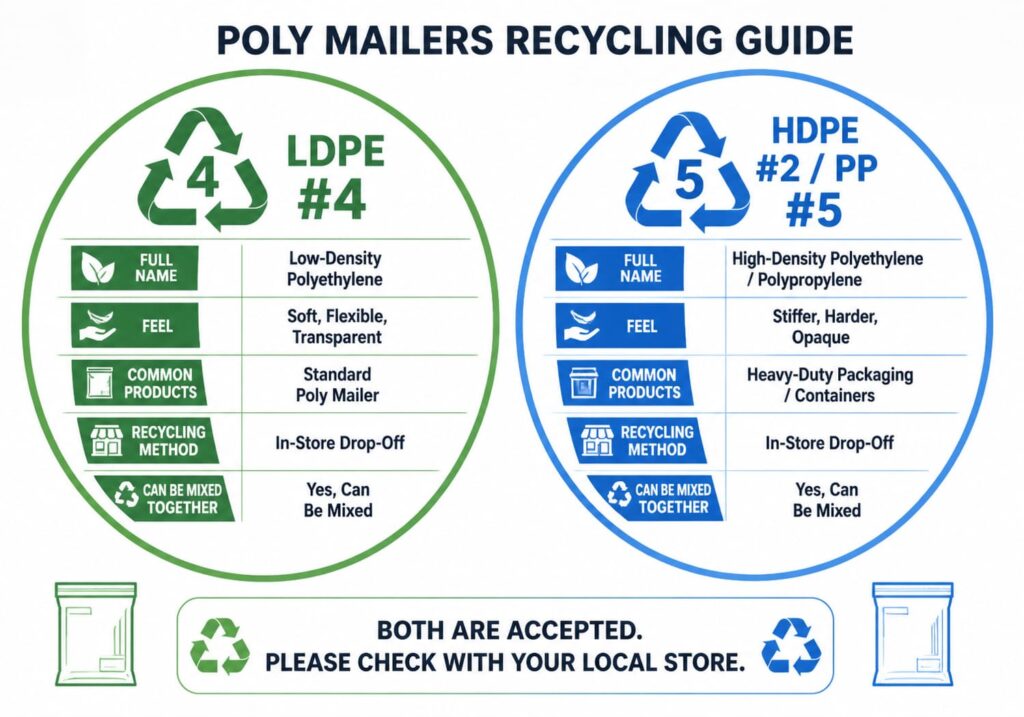
The key takeaway: even if your curbside program accepts #2 and #5 plastics, keep poly mailers out of that bin. They belong in the store drop-off stream with other plastic films.
Why Poly Mailers Cannot Go in Curbside Recycling
The machinery at Materials Recovery Facilities is designed to sort rigid plastics like bottles and containers. When thin, flexible plastic films like poly mailers enter this system, they behave very differently.
The problem: Poly mailers do not fall through sorting screens like rigid bottles do. Instead, they wrap around rotating equipment, tangle in screens, and cause costly shutdowns. Workers must manually cut away tangled plastic, which is dangerous and time-consuming.
According to the How2Recycle initiative, flexible plastics require separate collection and processing because they:
- Tangle in sorting machinery designed for rigid containers
- Cannot be properly sorted by optical scanners built for bottles
- Contaminate batches of rigid plastics when mixed in
- Create safety hazards for facility workers
Store drop-off programs have specialized equipment called “windshifters” that use air currents to separate lightweight films from other materials. This equipment cannot be found at standard curbside MRFs.
Learn more about how plastic recycling facilities work and why flexible films require special handling.
How to Recycle Poly Mailers: Step-by-Step
Proper poly mailer recycling requires three distinct preparation steps. Skipping any of these can result in your mailers being rejected or contaminating the recycling stream.
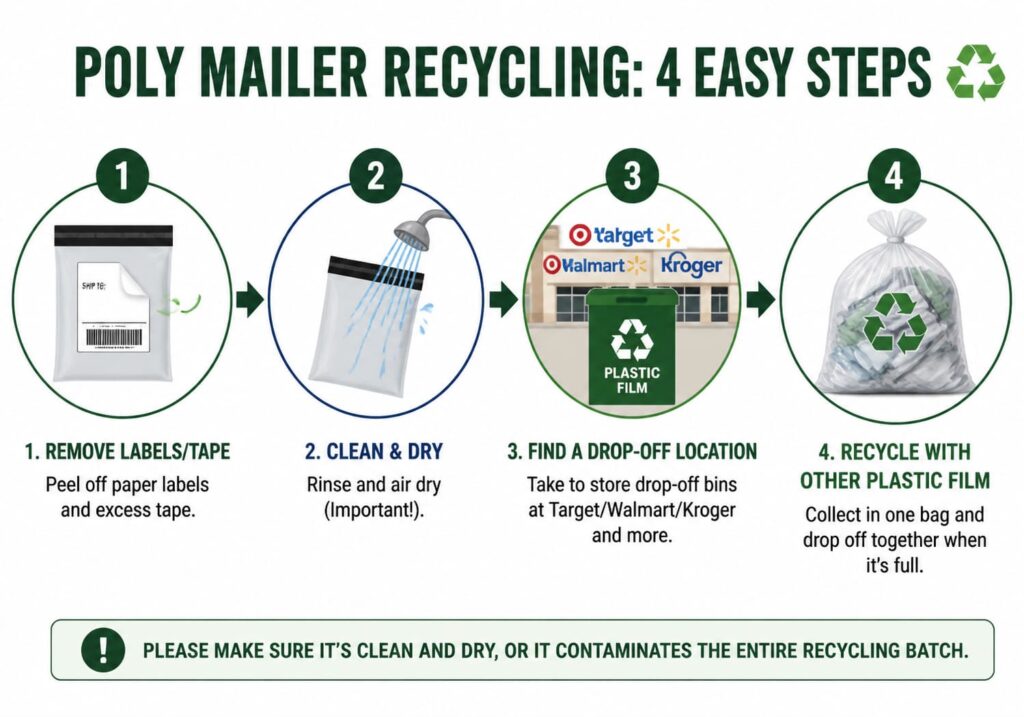
1 Remove All Labels and Tape
Paper shipping labels, barcode stickers, and excessive tape must be removed before recycling. These paper and adhesive components do not belong with polyethylene film recycling and will contaminate the batch.
Pro tip: The self-adhesive strip on poly mailers does not need to be removed. The polyethylene adhesive is recyclable along with the rest of the mailer.
2 Ensure Clean and Dry
Any food residue, moisture, or foreign materials will disqualify poly mailers from recycling. Wipe clean with a dry cloth if needed. For poly mailers that held items with spills or strong odors, it is better to dispose of them in regular trash than risk contaminating the recycling stream.
3 Find a Store Drop-Off Location
Locate the nearest participating retailer. Most major chains participate in plastic film recycling programs. Look for collection bins typically found:
- Near store entrances
- At customer service desks
- In the vestibule area
4 Drop Off With Other Plastic Films
Combine your poly mailers with other clean plastic films for efficient drop-off. Accepted items include grocery bags, bread bags, produce bags, dry cleaning bags, and air pillow packaging. Keep everything in one bag for easy deposit.
Important: Do not bag your recyclables in another poly mailer for transport. Use a reusable tote or cardboard box to bring items to the drop-off location.
Where to Recycle Poly Mailers Near You
The good news: plastic film recycling infrastructure is widely available across the United States. Major retailers actively participate in take-back programs because they benefit from the collected material.
National Retail Chains That Accept Poly Mailers
- Target: Plastic bag recycling bins at all store entrances
- Walmart: bins near customer service or entrance areas
- Kroger: participating locations with film recycling
- Safeway/Albertsons: most locations participate
- Whole Foods: dedicated film recycling stations
- Costco: warehouse locations with collection bins
- Home Depot: accepts plastic film packaging
- Lowe’s: participating locations
For the most accurate information, check your local store is still participating before making a trip. Some areas have discontinued programs or have limited availability.
Pro tip: Combine your poly mailer recycling with regular grocery shopping. Keep a dedicated reusable bag near your shipping station, then bring it along on your next store run.
For more sustainable shipping tips, including how to reduce packaging waste, visit our comprehensive guide.
The 4 Biggest Hurdles with Poly Mailer Recycling
Even when consumers want to recycle correctly, these common obstacles prevent proper disposal. Understanding them helps you avoid the mistakes that send poly mailers to landfill.
- Adhesive Strips: The self-sealing adhesive on poly mailers is recyclable polyethylene, but some consumers mistakenly remove it. Do not peel off the adhesive strip. It is part of the recyclable film.
- Paper Labels: Shipping labels with barcodes look recyclable but are paper coated with adhesive. Remove these completely before dropping off. They contaminate the plastic stream.
- Excessive Tape: Packing tape, especially clear polypropylene tape, is not recyclable with polyethylene film. Remove all tape longer than 2 inches before recycling.
- Mixed Materials: Paper-faced bubble mailers, padded mailers with bubble wrap + paper outer, and laminated mailers cannot be recycled. The mixed materials cannot be separated economically.
Before recycling any poly mailer, perform the “stretch test”: try to stretch the material between your fingers. If it stretches without tearing, it is likely LDPE #4 and recyclable. If it tears easily or has paper layers, it likely cannot be recycled through standard programs.
Poly Mailer Alternatives: Recycled, Reusable, and Compostable
If recyclability is a priority for your brand or household, several alternatives offer different environmental benefits. Each has distinct trade-offs in cost, performance, and end-of-life outcomes.
Best for Circularity
Recycled Poly Mailers
Made from post-consumer recycled polyethylene, these mailers divert plastic from landfills and require less energy to produce than virgin materials. Look for RCS certification to verify recycled content claims. Premium options contain 50%+ recycled material.
Recyclability: Same as standard poly mailers (store drop-off required)
Best for Reducing Waste
Reusable Poly Mailers
Constructed with dual adhesive strips, these mailers can be opened and resealed multiple times. Ideal for subscription boxes, returns programs, and high-volume shippers who can implement a take-back program. The extended lifecycle significantly reduces per-use environmental impact.
Recyclability: After multiple reuses, recycle through store drop-off
Best for Specific Situations
Compostable Mailers
Made from PLA/PBAT bio-polymers, these require industrial composting conditions (not home composting). They break down completely in commercial composting facilities but will not decompose in regular soil or landfills. BPI or TUV Austria certification verifies compostability claims.
Compostability: Requires industrial facility, not curbside composting
Best for Specific Situations
Compostable Mailers
Made from PLA/PBAT bio-polymers, these require industrial composting conditions (not home composting). They break down completely in commercial composting facilities but will not decompose in regular soil or landfills. BPI or TUV Austria certification verifies compostability claims.
Compostability: Requires industrial facility, not curbside composting
Not sure if industrial composting is right for your business? Learn about industrial composting requirements and certification to make an informed decision.
For most situations: Recycled poly mailers offer the best balance of environmental benefit and practical recyclability. The recycled content reduces virgin plastic demand while maintaining standard store drop-off recycling.
Looking for Recycled Content Poly Mailers?
Explore our selection of eco-certified poly mailers with verified recycled content for your shipping needs.
How to Identify Recyclable Poly Mailers
Not all poly mailers are created equal when it comes to recyclability. Here is how to quickly identify which mailers can be recycled through store drop-off programs.
Signs Your Poly Mailer IS Recyclable
- 100% polyethylene construction (no paper layers)
- Smooth, uniform plastic texture throughout
- Recycling code #4 or #5 printed somewhere on the bag
- No laminated or composite materials
- Stretches when pulled (passes the stretch test)
Signs Your Poly Mailer is NOT Recyclable
- Paper outer layer with bubble cushioning inside
- Metallic or foil-printed exterior
- Multiple different materials visibly bonded together
- Crossed-out recycling symbol (indicates not curbside recyclable)
- Tears easily or has paper-like brittleness
Amazon and carrier poly mailers: Most standard Amazon poly mailers and carrier-provided poly mailers ARE recyclable through store drop-off. The key is checking for composite construction and ensuring they are clean and dry.
What Happens to Recycled Poly Mailers?
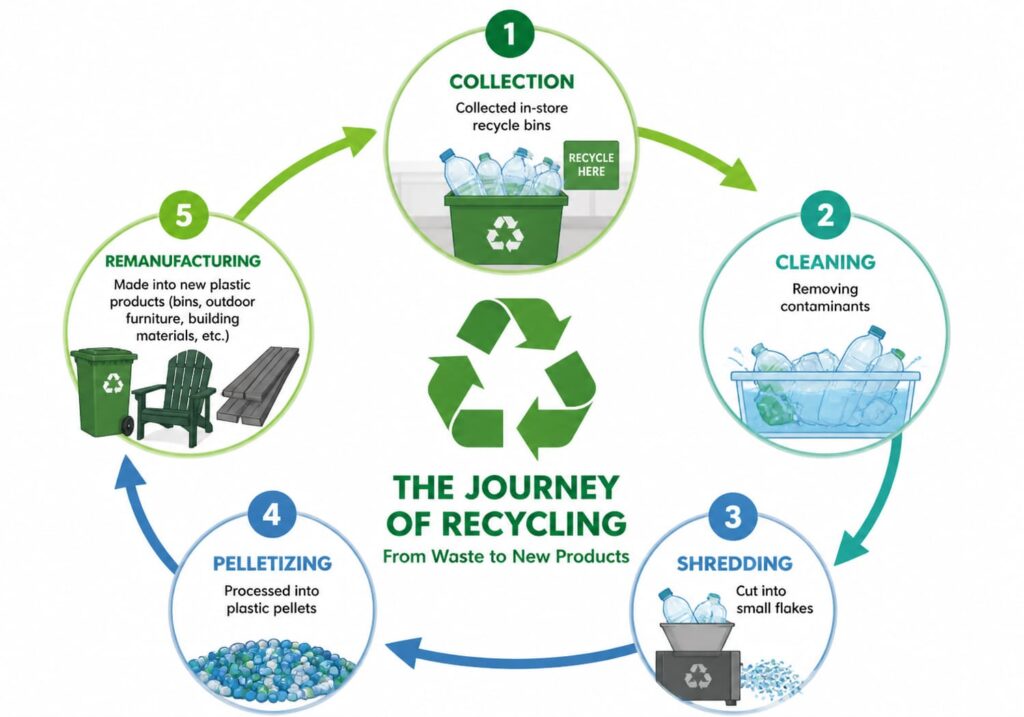
When poly mailers reach reclamation facilities through store drop-off programs, they begin a journey that supports true circular economy principles.
Step 1: Collection and Sorting – Baled poly mailers arrive at processing facilities where they are sorted by plastic type and cleanliness.
Step 2: Washing and Cleaning – Materials are thoroughly washed to remove any remaining adhesives, labels, or contaminants.
Step 3: Shredding – Clean polyethylene is shredded into small flakes or pellets suitable for manufacturing.
Step 4: Reclaiming – The recycled material becomes raw input for new products including:
- Composite lumber for decks and outdoor furniture
- New plastic film and bags
- Automotive parts
- Construction materials
- New poly mailers (circular economy)
This closed-loop process means the polyethylene in your poly mailers can live on indefinitely in new products, reducing demand for virgin plastic and keeping materials out of landfills.
Discover more about circular economy approaches to packaging and how your recycling choices impact the environment.
Frequently Asked Questions
Are poly mailers recyclable?
Yes, poly mailers are recyclable, but NOT in your curbside recycling bin. They require special store drop-off recycling programs at grocery stores and retail locations that accept plastic film. Curbside recycling facilities cannot process the thin polyethylene film that poly mailers are made from.
Why can't poly mailers go in curbside recycling?
Curbside recycling facilities use different sorting equipment than what’s needed for thin plastic films. Poly mailers are made of low-density polyethylene (LDPE #4) which tangles in the machinery at Materials Recovery Facilities (MRFs), causing shutdowns and contaminating other recyclables. Store drop-off programs have specialized equipment designed to handle flexible plastic film.
Are bubble mailers recyclable?
It depends on the construction. All-plastic bubble mailers made from 100% polyethylene ARE recyclable at store drop-off locations. However, paper-faced bubble mailers with plastic bubble cushioning inside are NOT recyclable because the mixed materials cannot be separated. The bubble wrap inside also contaminates the paper stream.
Can you recycle poly mailers at Target or Walmart?
Yes, both Target and Walmart participate in plastic film recycling programs. Most major grocery chains including Kroger, Safeway, and Whole Foods also accept clean, dry poly mailers at their store drop-off locations. Look for the plastic film recycling bin typically near the entrance or customer service area.
What happens to recycled poly mailers?
Collected poly mailers are baled and sent to reclamation facilities where they are washed, shredded, and processed into recycled polyethylene pellets. These pellets become raw material for new products including composite lumber, new plastic film, automotive parts, and new mailers, supporting a true circular economy.
Do Amazon poly mailers have recycling symbols?
Amazon poly mailers typically display the #4 LDPE recycling symbol. However, the presence of a recycling symbol does not mean they belong in curbside bins. The crossed-out recycling symbol on some Amazon envelopes indicates they are NOT recyclable through standard curbside programs. Always use store drop-off for Amazon poly mailers.
What recycling code are poly mailers?
Most poly mailers are made from LDPE (Low-Density Polyethylene) marked as recycling code #4. Some premium or specialty poly mailers may be made from polypropylene (PP) marked as code #5. Both #4 and #5 plastics are recyclable through store drop-off programs but NOT through curbside recycling.
How do you prepare poly mailers for recycling?
Before recycling: 1) Remove all paper labels and stickers as they contaminate the plastic stream, 2) Pull off any excessive tape, 3) Ensure the poly mailer is clean and dry with no food residue, 4) Keep the adhesive strip intact as this is recyclable polyethylene. Do not include any non-poly components.
Are compostable poly mailers better than recyclable ones?
Both have merit in different situations. Recyclable poly mailers support circular economy by becoming new products. Compostable mailers require industrial composting conditions (not home composting) and are better when landfill diversion is the priority. For most ecommerce situations, recyclable mailers made from recycled content offer the best environmental outcome.
What can I do with non-recyclable poly mailers?
If your poly mailers are not recyclable (laminated materials, mixed components, or contaminated), options include: 1) Reuse them for shipping or storage, 2) Contact the manufacturer for take-back programs, 3) Check if your waste management company offers special plastic film collection, or 4) As a last resort, dispose in regular trash to avoid contaminating recycling streams.
Ready to eliminate seal failures and size mismatches from your supply chain?
Request a formal quote with your specifications. Response within 4 business hours.
RHK Packaging — ISO 9001:2015 Certified Manufacturer Since 2010
[email protected]